By Rupert Welchman of Team Summit Saints
Back in February 2024 a group of old university mates assembled in La Tzoumaz on the other side of the mountain from Verbier for a weekend to catch up on years we had seen precious little of each other; a time when much had happened in each of our lives. By the end of a few days together, one thing appeared to have been agreed, even if not explicitly stated. We would assemble a team to take part in Everest in the Alps 2026. The mix of an opportunity to fundraise for a cause close to all our hearts and the pull of a serious physical challenge made a persuasive cocktail of incentives. EIA’s founder, Robert Ritchie had insisted that 2026 would be his last EIA, so we really didn’t have a choice – and that was the story we then peddled to our wives when we returned home.
A client and friend of Rob’s, David Bucknall and my wife’s cousin, Flo, subsequently agreed to join the Summit Saints and by September 2025, our team of 7 was assembled.
What follows is an honest look back at EIA for those considering embarking on the challenge – hopefully covering many of the (often mundane) questions which we ourselves asked as we prepared and then undertook the challenge. This account is written from the point of view of someone taking on EIA for the first time, with no experience of ski touring.
The Lead Up
Having Rob Ritchie in our team gave us an information advantage; there is nothing like the ultimate insider in your camp. We introduced a weekly call where the team could discuss everything including training, blisters, in resort admin, fundraising and sponsorship. We also made good use of the EIA resources on offer: Anna was there to answer a diverse spectrum of questions, Becky helped on training routines and consultations to design the best fitness plans and the Brain Tumour Charity on fundraising. Whilst it is on you to deliver, there is a lot of support to help you.
Training
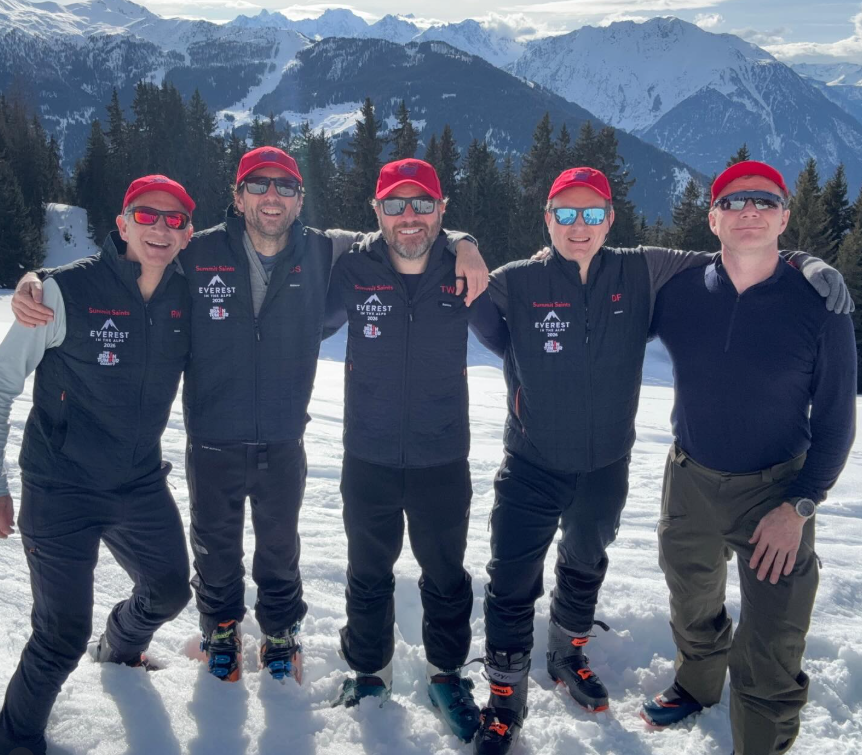
For those, intrigued, but perhaps feeling a bit daunted by the physical challenge, I would offer the following comfort – each member of our team approached training in a different way and we all got fit enough for EIA. Toby rose early (and when I say early I mean Milkman early), tied a bungy cord around his waist and jumped in a freezing pool for 30 minutes of ice-cold freestyle. Towards the the last few weeks, Toby’s swimming was replaced with long sessions on a Peleton bike and dog walks in Richmond Park in his ski touring boots, no doubt been quite a sight. Craig trained with the Sale Harriers and ran. Flo took the enviable step of renting a chalet to actually train by …ski touring. David cycled the demanding inclines of his home region of the South of France whilst Duncan scaled Glencoe. After years of experience Rob opted for long sessions on his Versaclimber whereas I mixed up a range of activities from mountain biking the tracks of Wiltshire, the cross-trainer in the village gym to repetitions up a steep track. The basic message, I would share is that there are lots of ways to train for EIA and so long as you focus on long duration sessions and strengthen your legs, you will not go wrong.
Fundraising
As with training – this can appear quite daunting – EIA has raised over £6m for Brain Tumour Research over its 10 events – that is an extraordinary figure – unless you are superbly well connected, or a natural-born fundraiser with a lot of time on your hands, you may question your ability to attract what you might consider a fitting donation pot. We had similar doubts – however, at the time of writing we are well over £125,000 and each team member has achieved more than targeted.
The EIA and Brain Tumour Charity teams are deeply experienced in fundraising, and their pointers and resources will assist your efforts. Take a little time when you first sign up to create a multi-faceted strategy. It will be effort well spent and it will identify a roadmap to follow. Don’t be afraid to pitch your cause to as many people as you can. What’s the worst they can say? The Summit Saints can count over 700 individual donors to our fundraiser; I don’t think we are at all unique, I honestly believe this kind of supporter group is attainable to most EIA teams. We also raised over £5,500 by creating a sponsored gilet generously supplied by Finisterre at a large discount.
If like us, you are worried about creating the impression you are off on a ski jolly then design your message to explain why this isn’t the case. First and foremost, centre your appeal around the use of funds raised. Then emphasise the physical effort involved in preparation for the event. Finally, if you can, you should not be shy in explaining that you are covering all your costs and every penny raise goes to the charity. As a trustee on a number of charities, I am acutely aware that a charity that consumes a high percentage of funds raised on its own costs, is a massive turnoff. We found our donors loved the fact that 100% of their money would be spent on research. Messaging is key.
Shocker!
Our preparation was not smooth. Craig put his back out and was then beset by a bout of flu which derailed about a month of his training. We had a bereavement among the team’s loved ones. And then Flo called me. She told me she had been on a training climb when her heartbeat had gone completely wild, making her feel distinctly weird. It transpired that she suffers from heart arrythmia. Her doctor strongly advised her to ditch EIA… and sadly this was the right decision. If you have something like this, don’t try and be a hero; not only are you putting yourself in unnecessary danger, but also the EIA staff have enough to cope with in unforeseen complications during the four days, without trying to accommodate a known serious health risk in one of the participants. For our team, it meant the Summit Saints bade Flo a commiserating farewell and ploughed on.
Sunday 22nd
And before you know it, EIA got real. The Summit Saints had assembled in La Tzoumaz on Saturday.
A neat fix we learned after some convincing the ticket office staff with support from the EIA team, was that it was possible to pick up lift passes a day early from any ticket office in the 4 Valleys network – this saves time.
We headed over Savoleyres to get our rental kit from Mountain Air. A word about this place – they are hugely efficient, very communicative in the run up to EIA and super helpful when it comes to the day of your boot and ski fitting. I, for one, had never worn touring boots before and didn’t know what to expect. When my boots started to produce hot spots in our first ski tour practice, Rob was clear in his advice – Go and get them changed. When you are about to spend 12 hours a day in these boots you will want to go as comfortable as you can – if it takes 3 changes of boots – I wouldn’t think twice about it, even if it feels like a hassle.
If, as a future EIA team member, you are not well-experienced in ski touring, I would strongly advise taking some time on the Sunday to get acquainted with the activity, in an unpressured setting. Although this will be repeated on the Monday, you will feel a bit more scrutinised (in a good way) on this official test run.
Monday 23rd
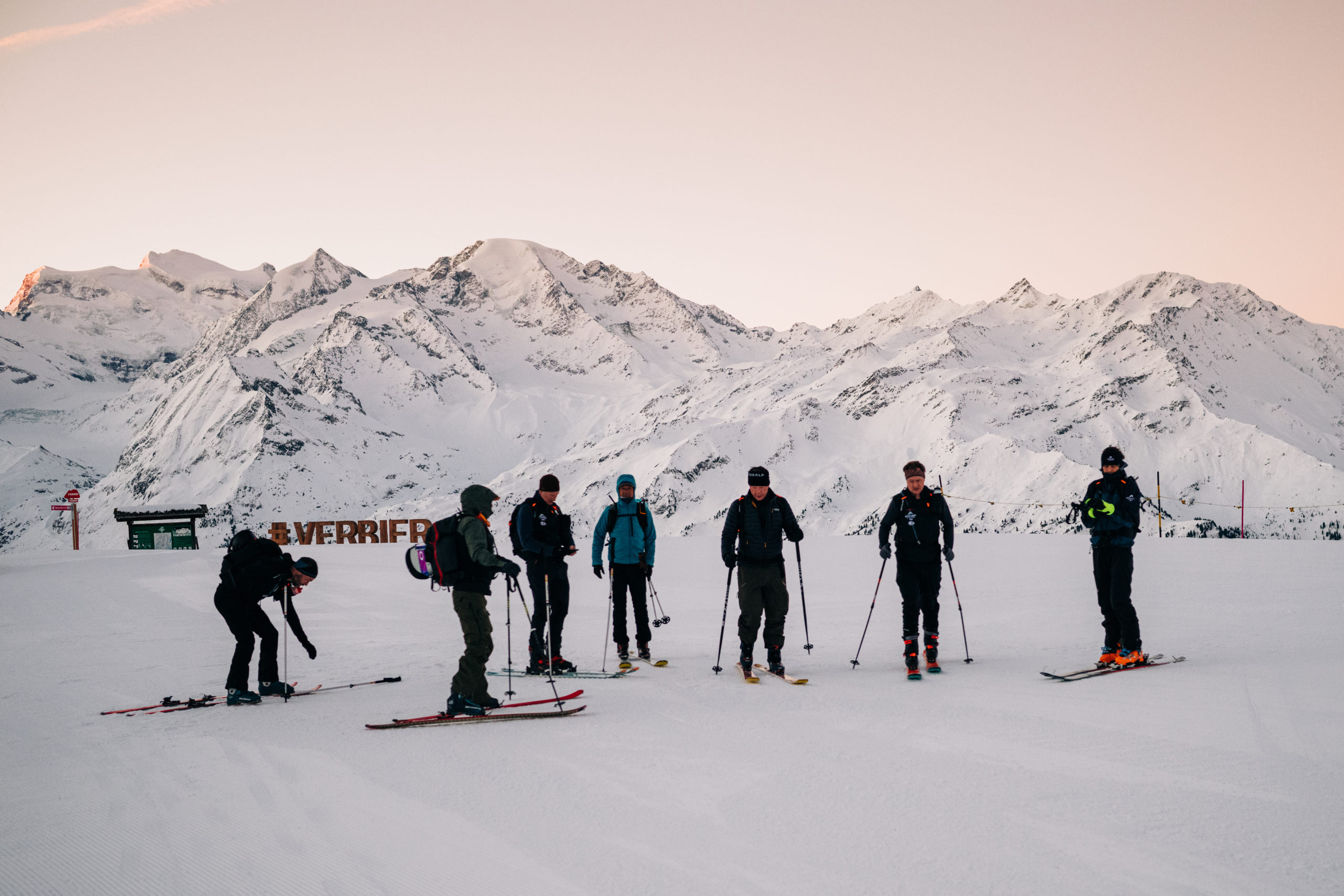
Weather forecast – blue sky – temperature above freezing – that was how the training day for EIA began. The team walked off up the mountain to take a lift from La Tzoumaz over to Verbier – the last lift we would take up a mountain for the next 5 days (except for a couple which will be explained later!).
A word on packing – because this was an element of uncertainty and the source of a few questions. You will be staying somewhere of your own choice on the Monday night and then again on the Friday night, but for the middle three nights you will be staying up the mountain. If like us, you are coming into resort on the Monday you will therefore need:
1) an overnight bag and evening clothes for Monday night,
2) a full kit bag for your three nights in La Cabane Mont Fort must fit into a 20L dry bag and will be transported up there by the support team on Day 1 and
3) an overnight bag and evening clothes for Friday night.
Requirements for 1) and 3) could be contained in the same bag and can be looked after by the EIA team whilst you are up the mountain – but it is good to be organised as you don’t want to be madly repacking at 5.30am on the Monday morning when your mind is 100% focused on the challenge ahead. I would add that if you need accommodation in Verbier for Monday and Friday nights, you should book this early and as close to Medran as you can. Someone in your team will need to take the lead with this.
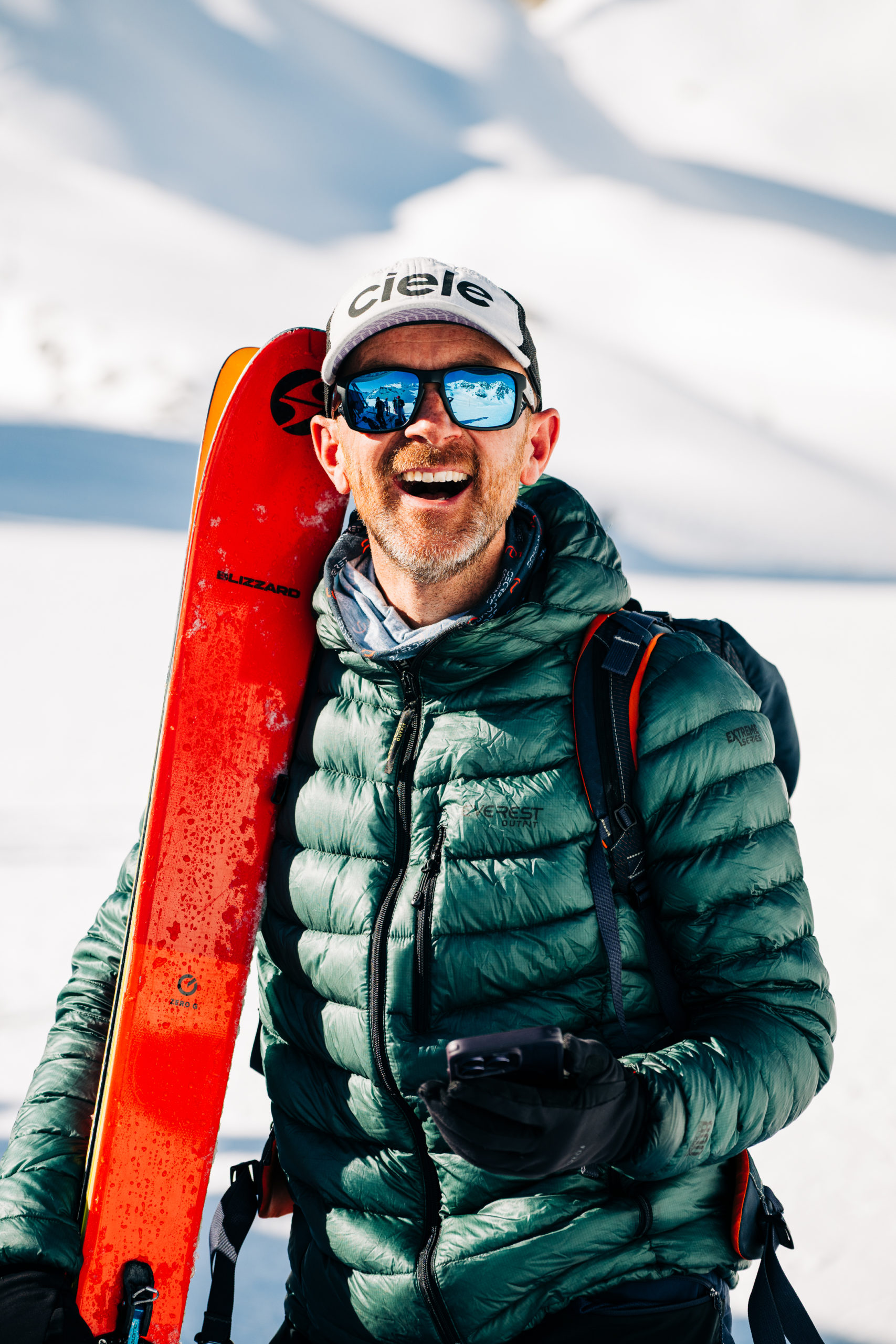
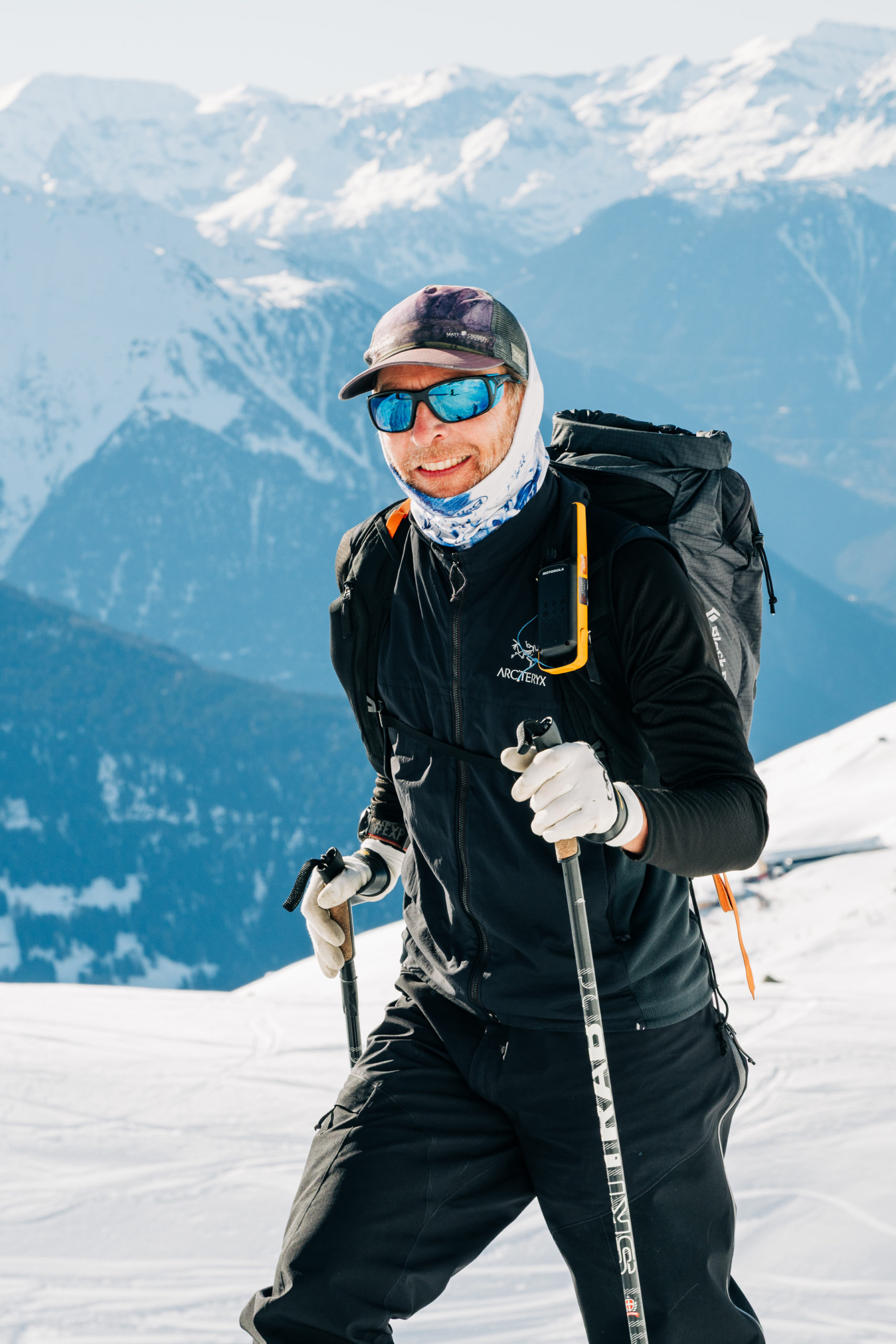
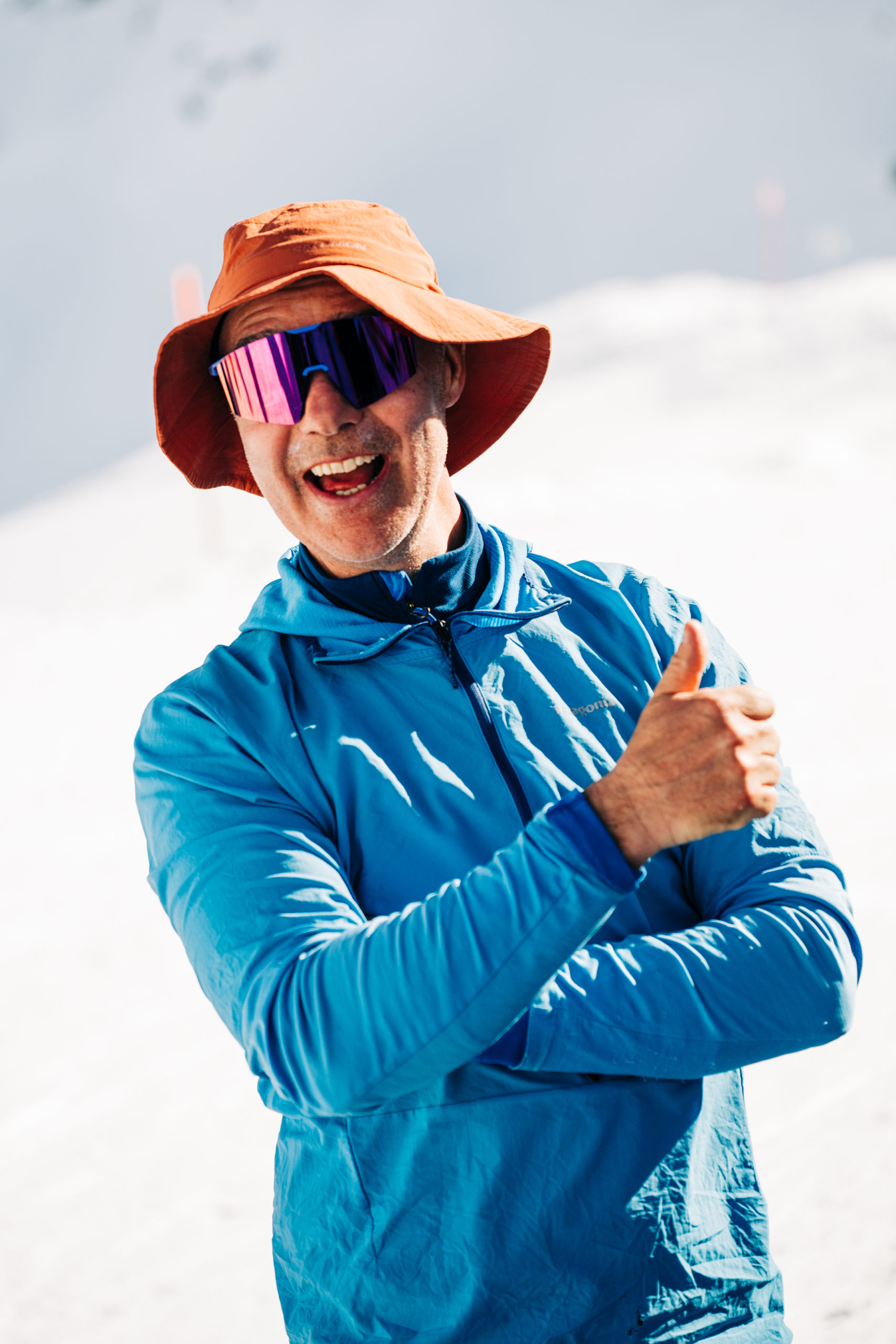
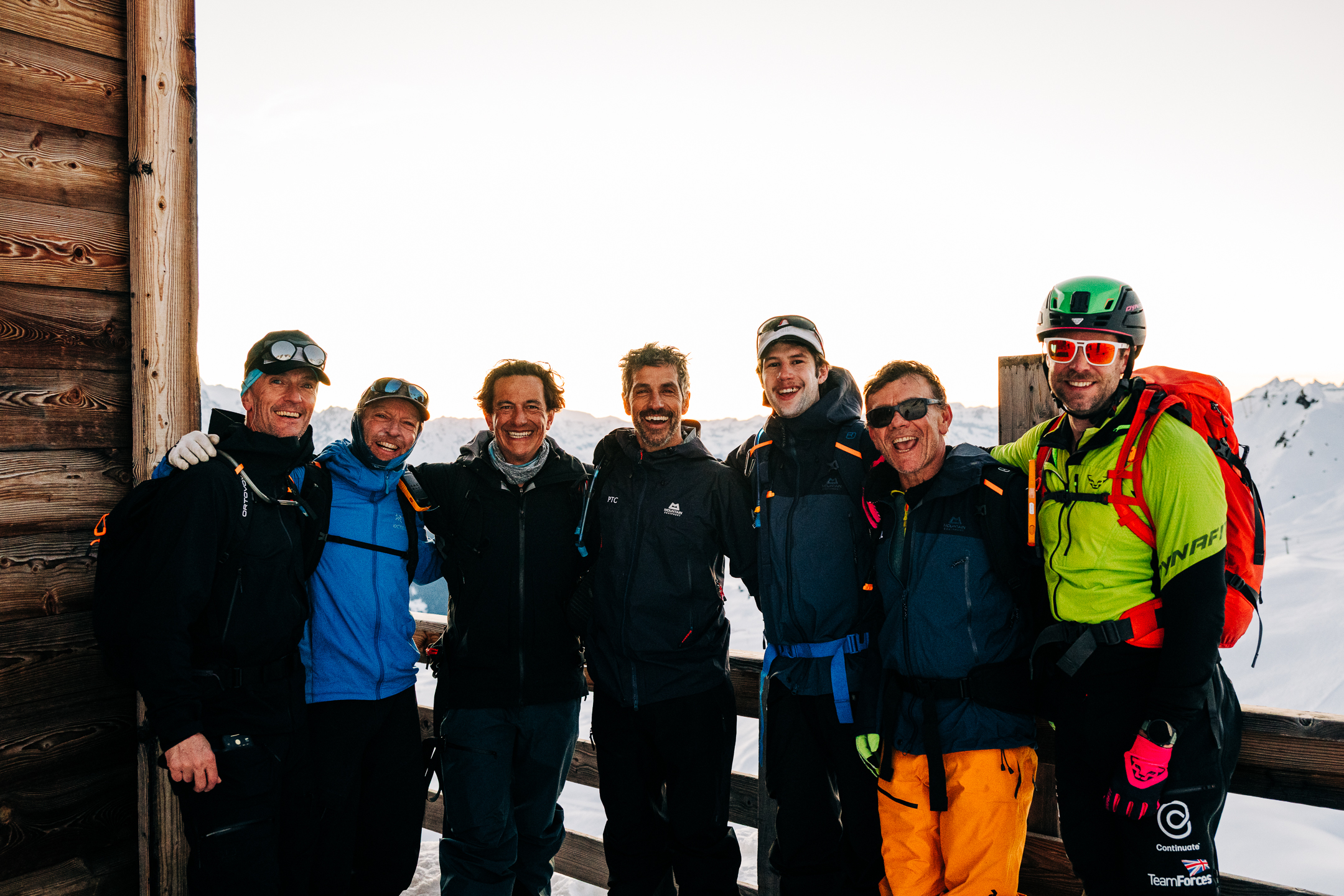
Around the middle of Monday we met our handlers, led by true Everest Summiteer, Paul Spackman and supported by Rob and Greg. Rob had been given the short straw and was assigned to our team. Over lunch we met the 5 members of the other EIA team, Syren – in total there were now 10 summiteers. The briefing is mostly common sense – but it lays out the structure of the four days, and it is re-assuring to first time summiteers; it leaves you with a sense that you are in good hands. Perhaps because the weather forecast was going to be so settled, there were fewer eventualities to consider. We were lucky the event had not taken place the week before when snow, high winds and avalanches may have made EIA far trickier, perhaps even impossible.
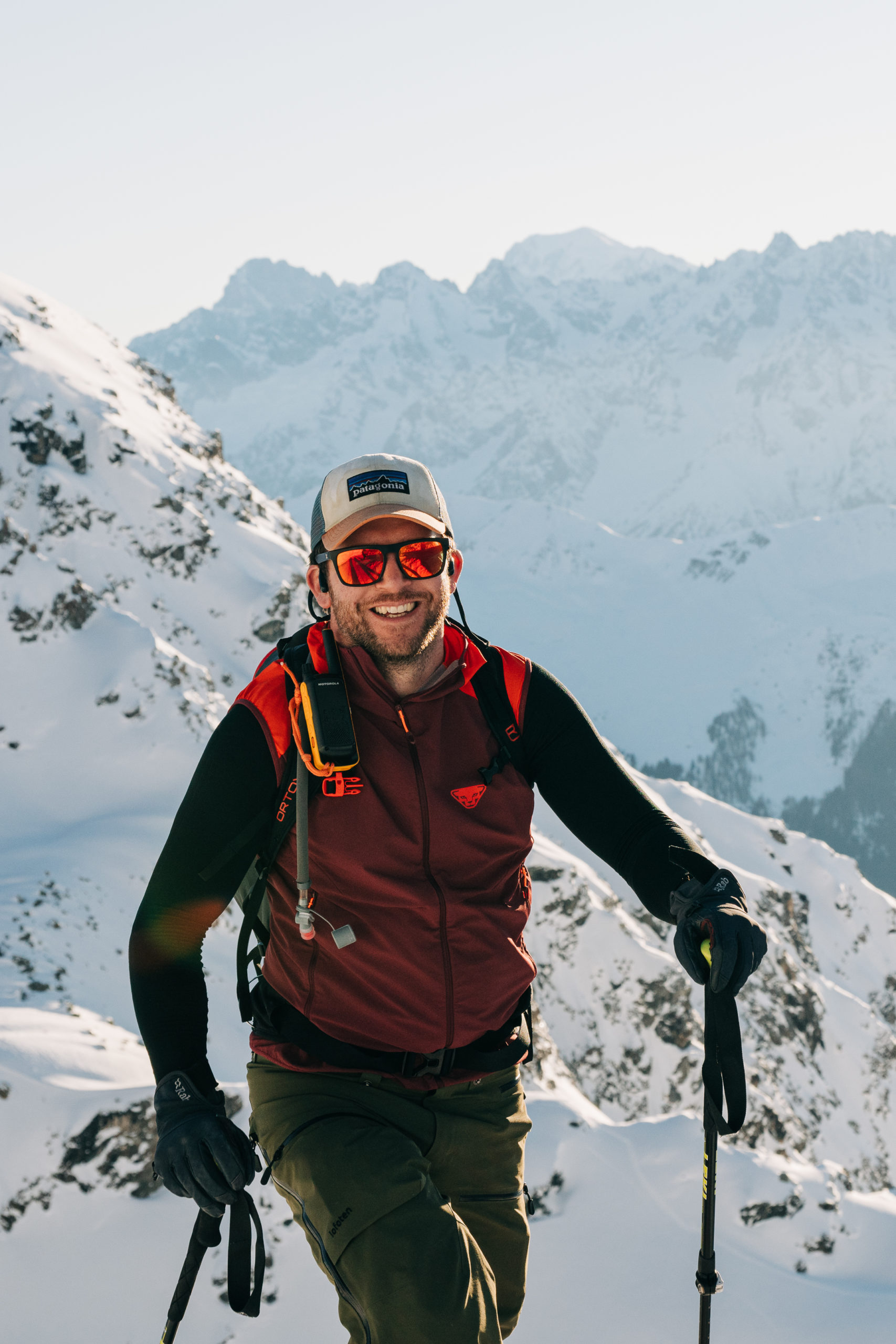
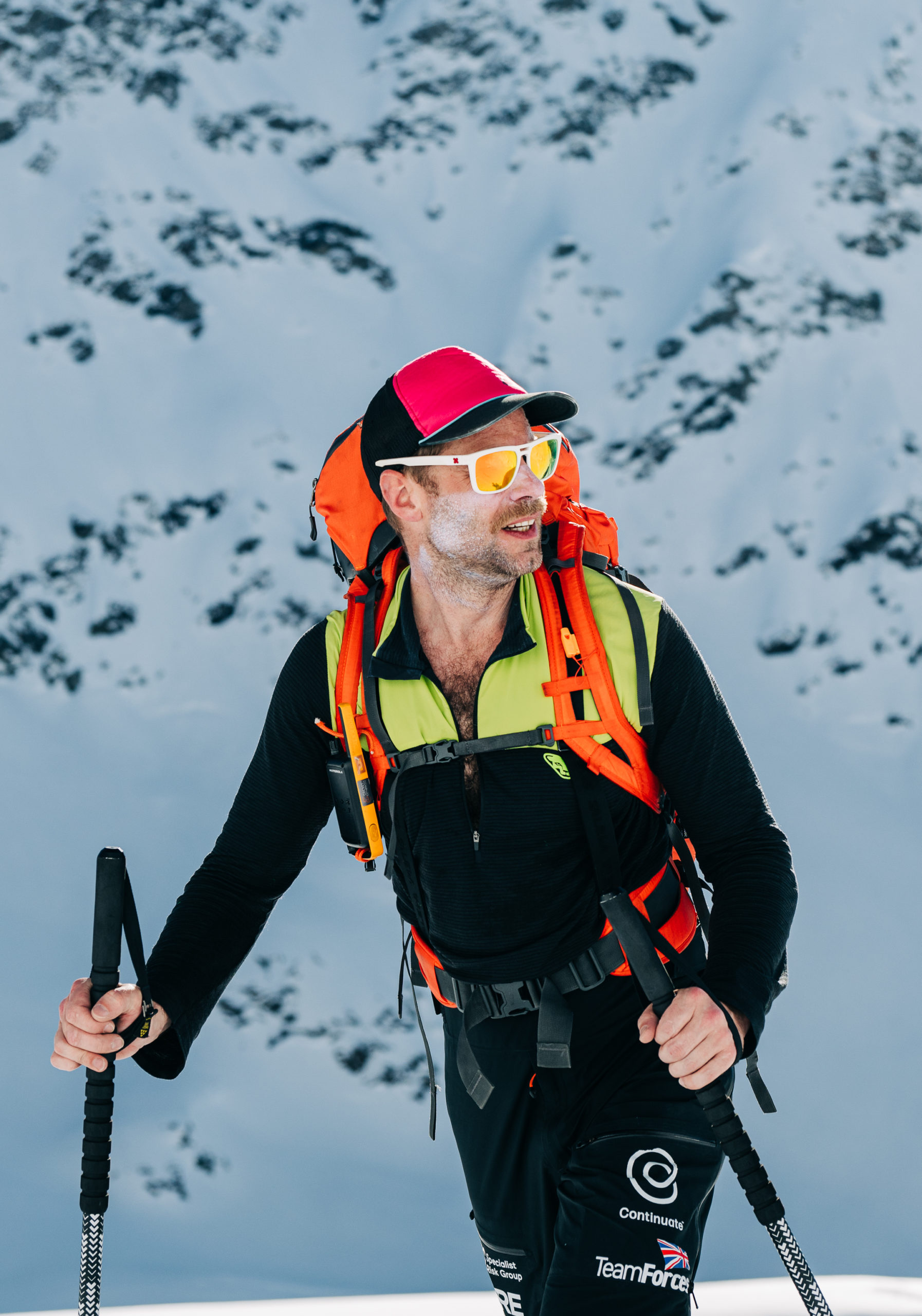
We were also introduced to two other really important components of EIA. Stu and Jonny, representing the Adaptive Grand Slam – an organisation made up of athletes with disabilities. It is no understatement to say that over the next four days, they created an awesome reputation for grit, fitness and competence among the summiteers, always supportive, never anything but cheerful.
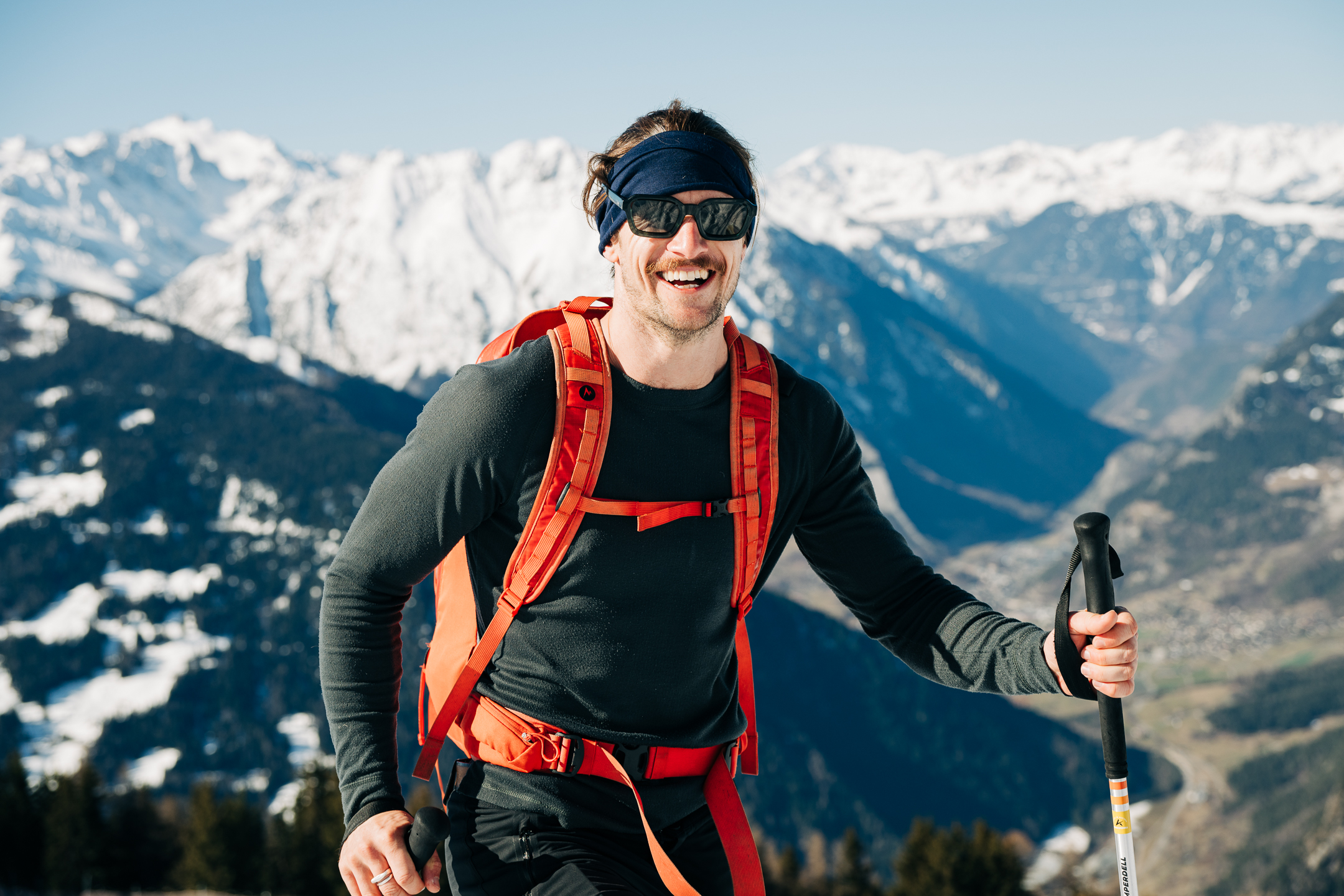
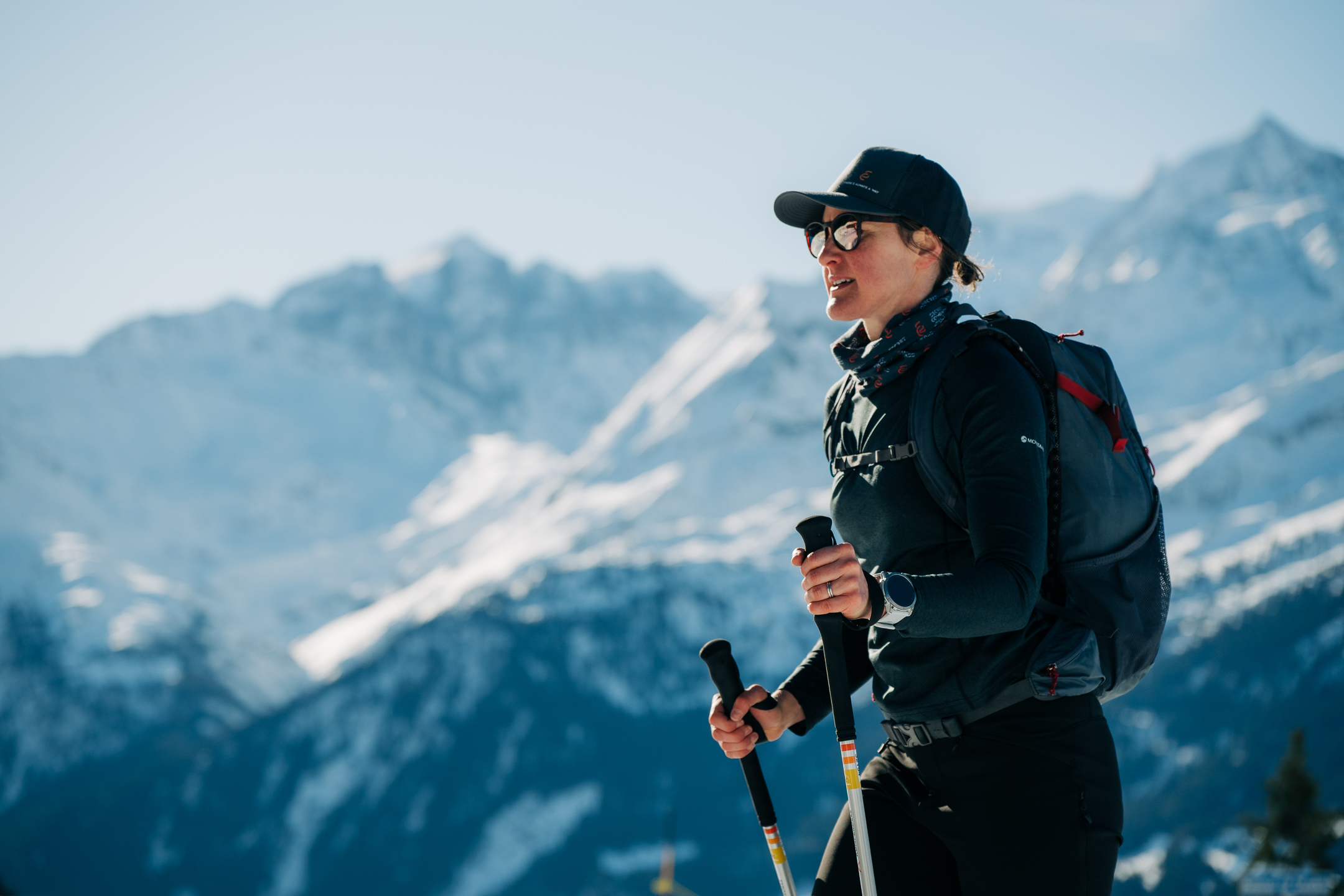
The other key components is the physio/masseur team, in 2026 represented by Charlie and Charlotte. These guys work miracles on blistered feet, sore muscles and painful ligaments. Charlie and Charlotte did all the vertical metres during the day and then got to work in the evening when the rest of us enjoyed some down time. If the price of EIA may seem a little steep, it is worth knowing that these are the very valuable elements you are paying for.
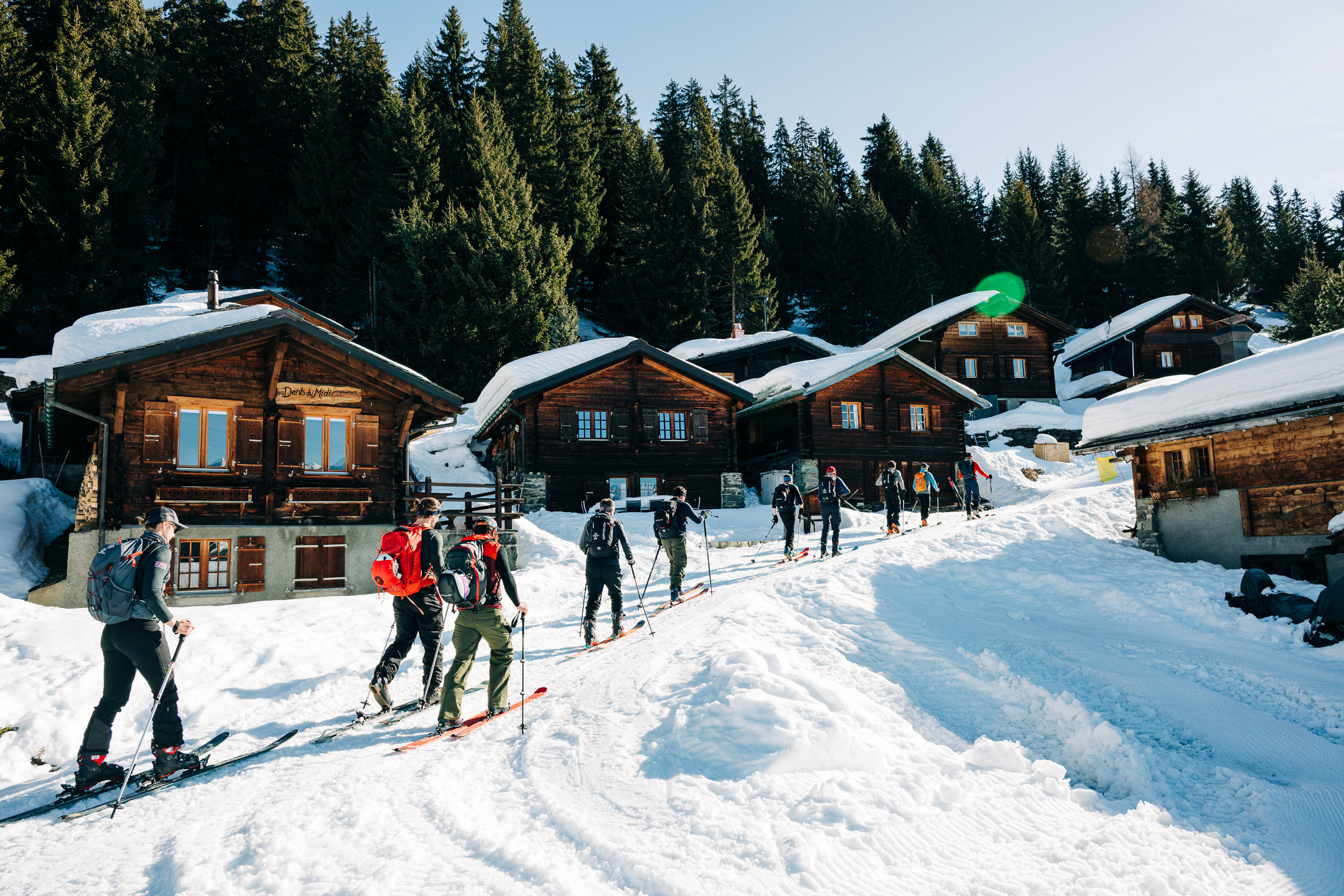
Paul, Rob and Greg took us all on a trial tour up to Chez Danny – which whilst only a short hike, did introduce us to different terrains including the steeper icy bits where it’s necessary to stand tall, stick your chest out and lean back to get the extra grip – this was probably the most unnatural technique in ski touring but it does work when you need extra grip and it’s definitely worth mastering. In terms of the secret to the completing such an endurance challenge, efficiency of movement, and different techniques are going to pay dividends. You will avoid falling over and expending wasted effort.
Tuesday 24th
Summit Saints didn’t kick off Everest In The Alps auspiciously. Our hotel was a good 15 minutes’ walk away from Mountain Air – which is fine on for an evening stroll, but when you are carrying bags 1) to 3) (described above), your skis and poles, your daypack and walking in touring boots – this is not a great way to begin the challenge. We arrived at the start line hot and sweaty before we had even begun. So, the earlier advice re accommodation is in hindsight really important.
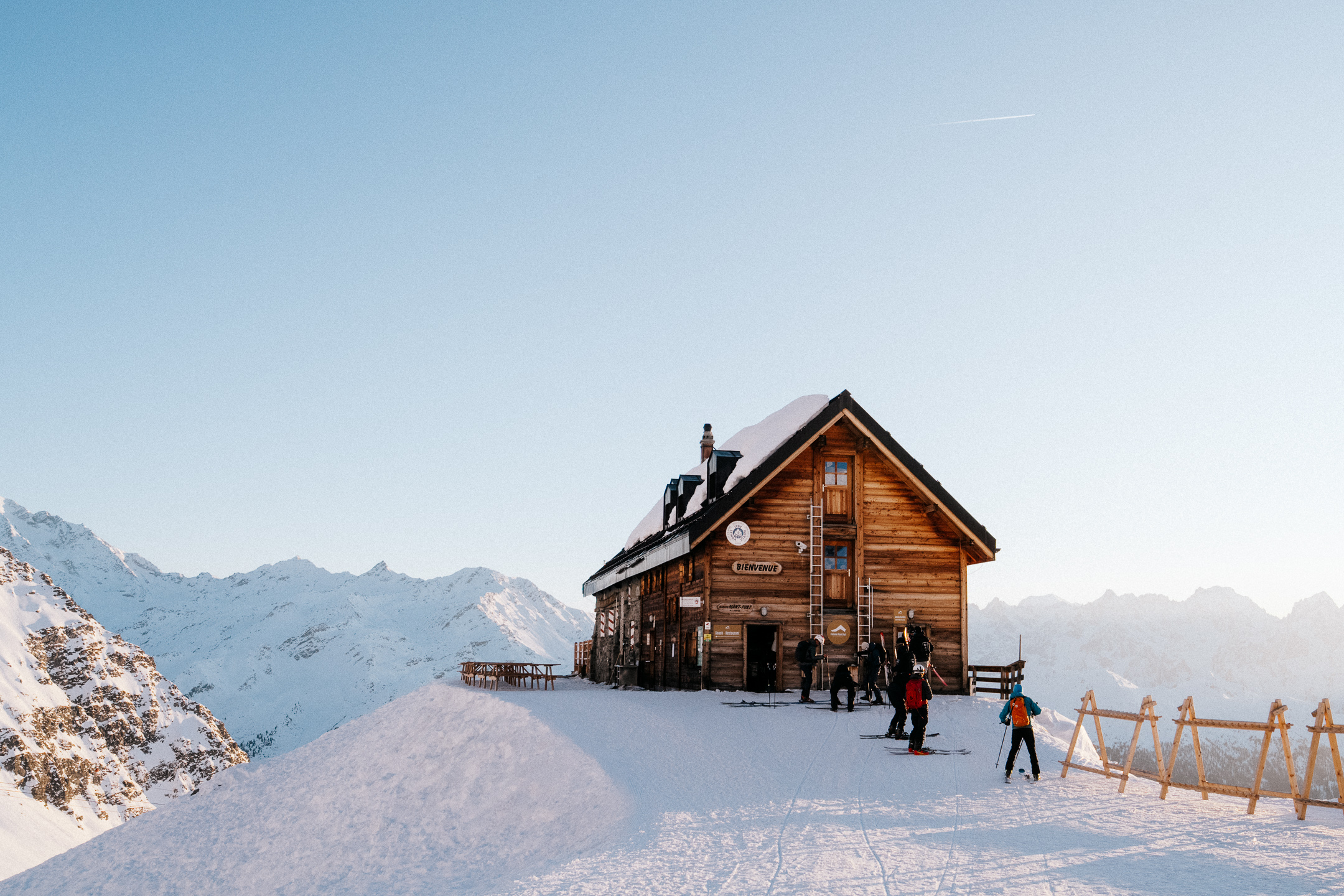
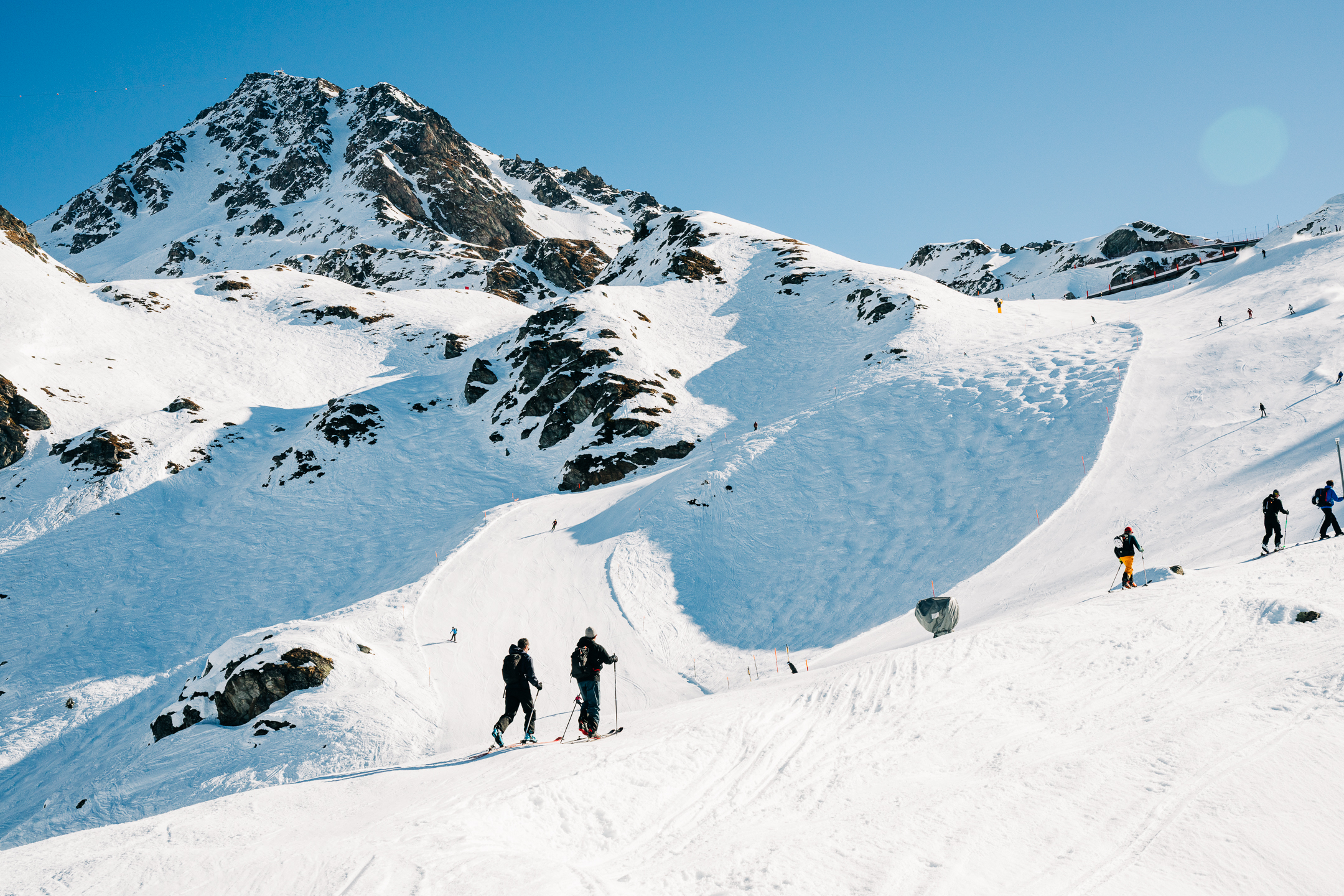
Paul, Rob, Stu and the rest of the team were there to get us moving off – and off we went. The first morning involved a repetition of Monday, up to Chez Danny and beyond and then a traverse past Carrefour towards Savoleyres to set off on our first serious ascent. The team got comfortable with their kit, the guides got comfortable with our pace. At one point, we were worried we were going too slow. This is actually a fear you might encounter as there is quite a lot of emphasis on vertical metres gain on day 1 and the unattractive prospect you face if your team has to chase metres later in the week. As it turned out – we were not slow. By the time we arrived at the Cabane Mont Fort as the sun was setting, we had banked 2,600 metres which is about as good as it gets for Day 1. The weather had definitely been on our side and remained so all week.
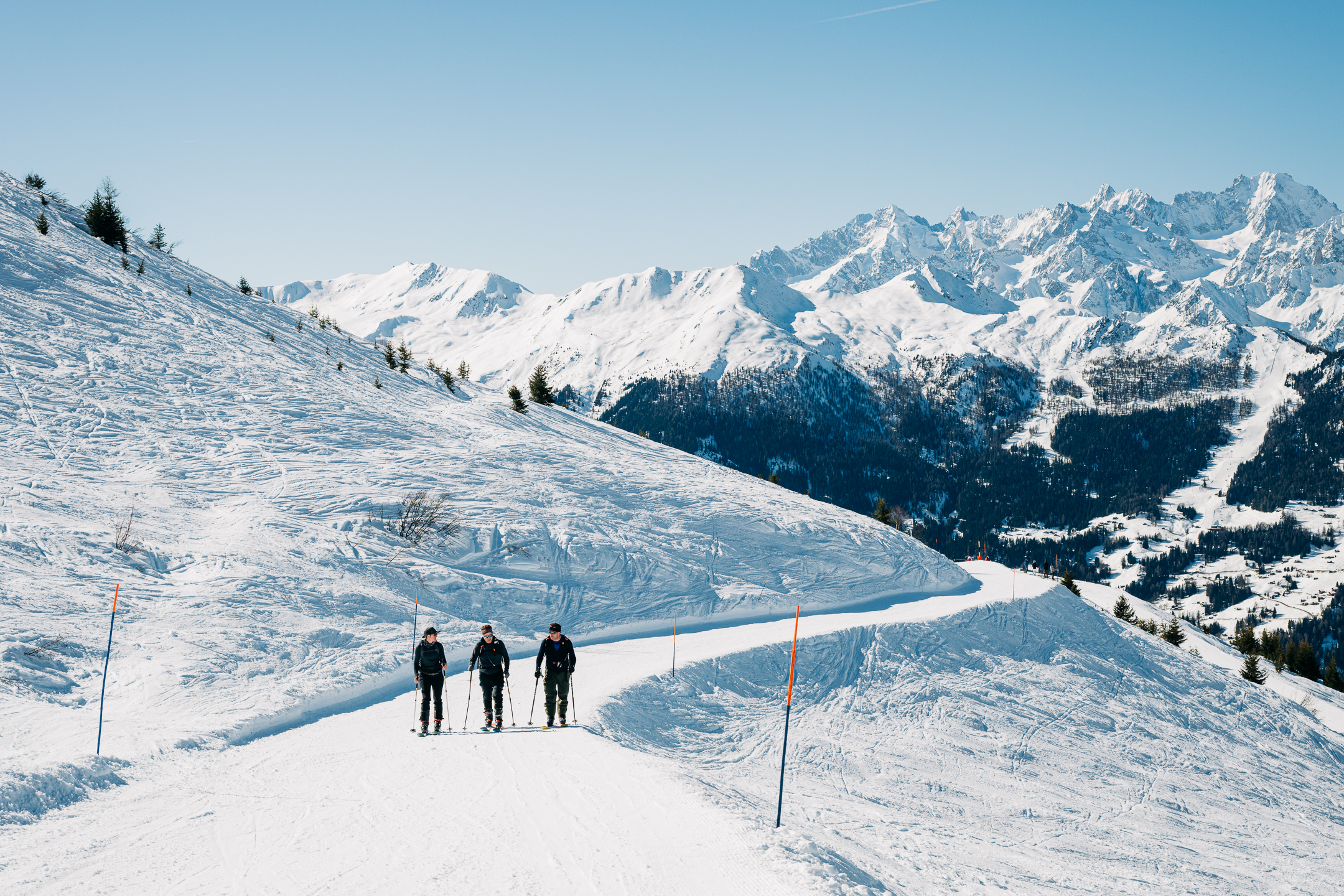
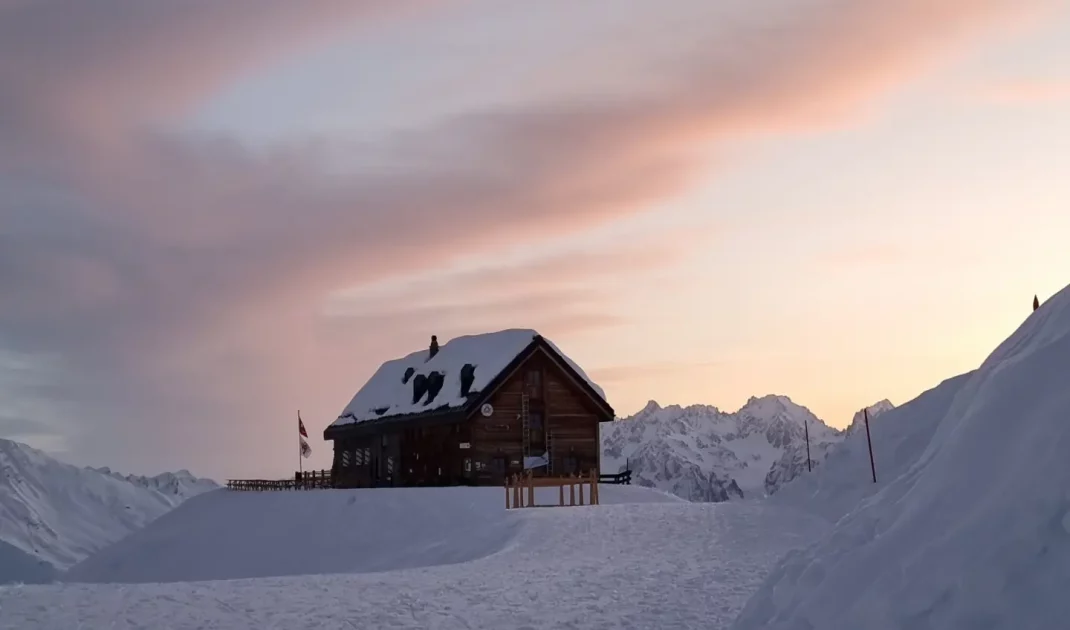
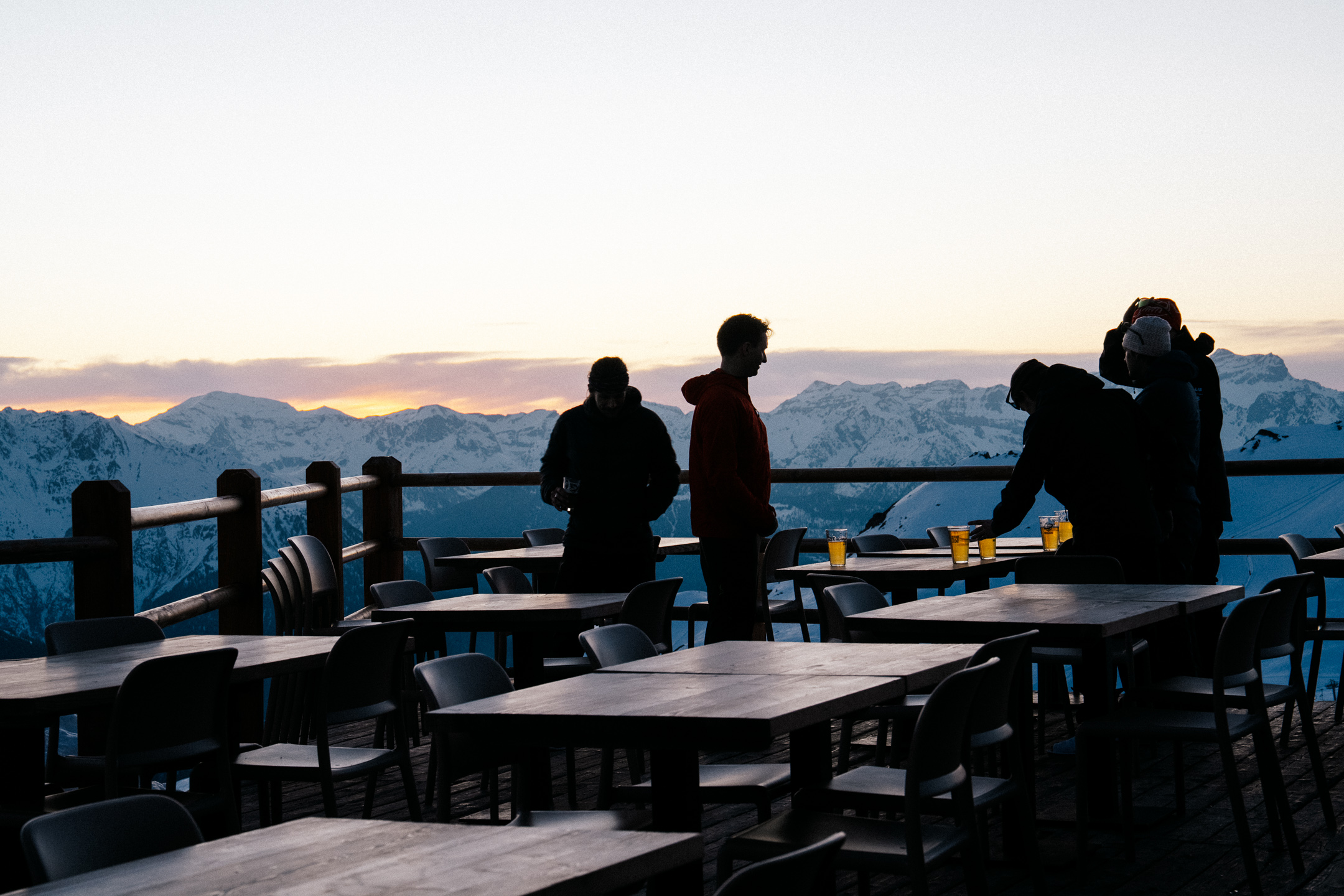
The Cabane is a magical place. Hugely popular during the daytime, it becomes familial and cosy by night. The bedrooms are basic but not uncomfortable. There is a huge jar of earplugs in the washrooms hinting at the night sounds you are likely to encounter. Paul advised us to take out our boot inners and leave them drying in the bedroom and yes this is 100% a good idea – you don’t want wet boots in the morning, your feet are unlikely to forgive you. But do go in search of the boot freshener aerosols which are kept in the boot store – we only discovered these on day 3, which meant we had endured some pretty pungent conditions in our 4-man dorm. Rob Ritchie had lent me a natty little gadget, a boot warmer, which I had managed to squeeze into my 20kg bag.
Once you get in around sunset, the order of events is 1) book your massage time 2) stow your kit and change out of your touring clothes in your room, 3) go and have a shower (people focus on the CHF5 for 2 mins, but I am here to tell you it’s a good shower and it’s worth it), 4) Repack your daypack for the following day 5) head down for supper at 7pm and a well-earned beer/wine. Our first night was made eventful by the presence of a very well-known British podcaster – we were all so knackered that this probably tempered any urge to invade his privacy. Our eyes were beginning to closely involuntarily before pudding was served – weirdly though, we did manage to get to bed, no one slept well.
A word on food during the day – this is not a one-size fits all aspect of EIA. Just work on the strategy that your daily food intake is aimed at keeping your energy levels high all day long, thereby avoiding any crashes. As Rob told us, we had more food than we could possibly get through, but this is the right end of the spectrum to be at. I, for one, mixed my own trail-mixed (nuts, chocolate, fruit, seeds), nutty bars, tangerines, jerky and gels. Some people say gels can have bad digestive effects and I would have sympathy with this – my worst nightmare on the slopes would definitely be dodgy tum. But your choice of food is a personal preference so definitely try a few alternatives when you are training.
Wednesday 25th
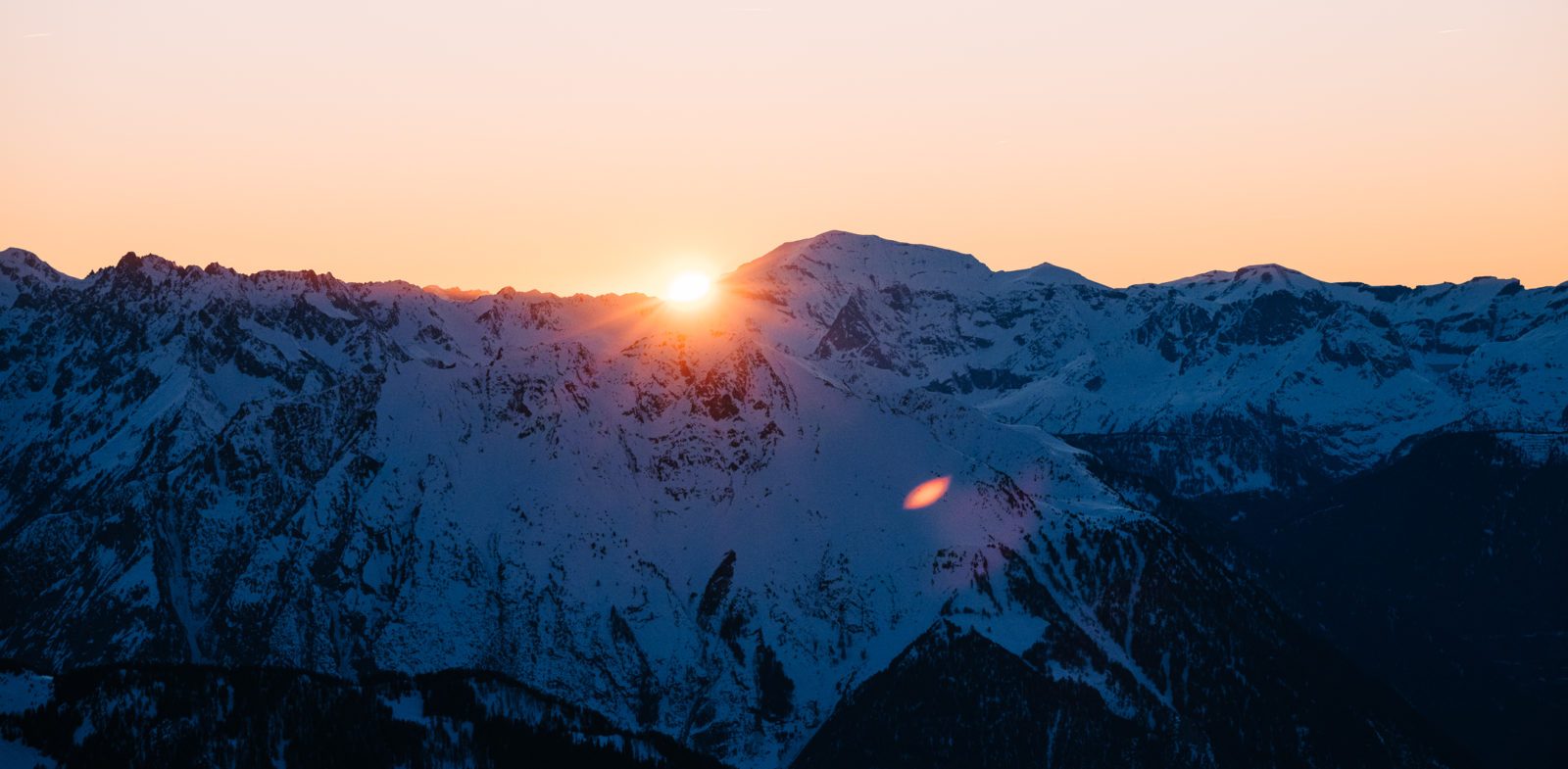
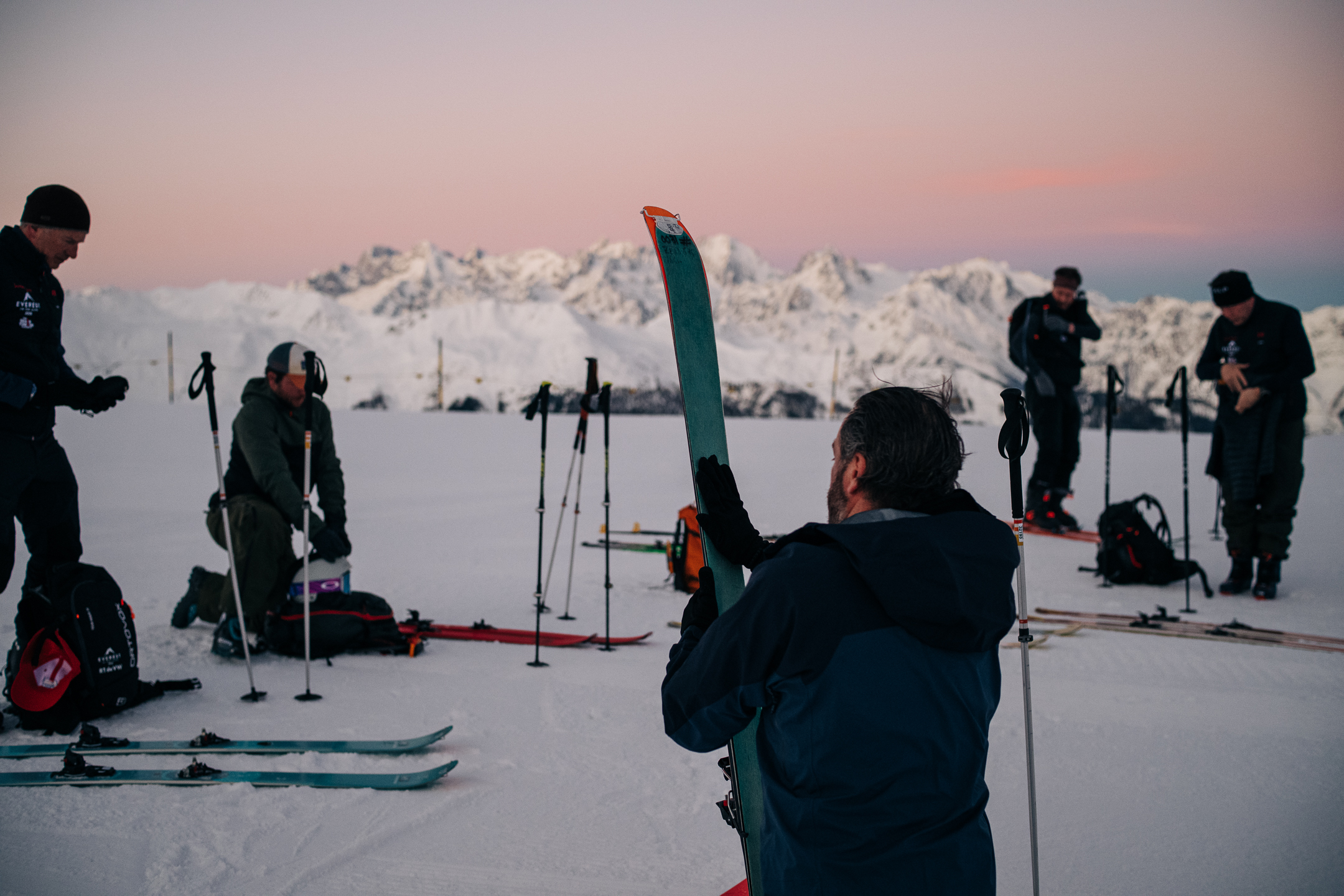
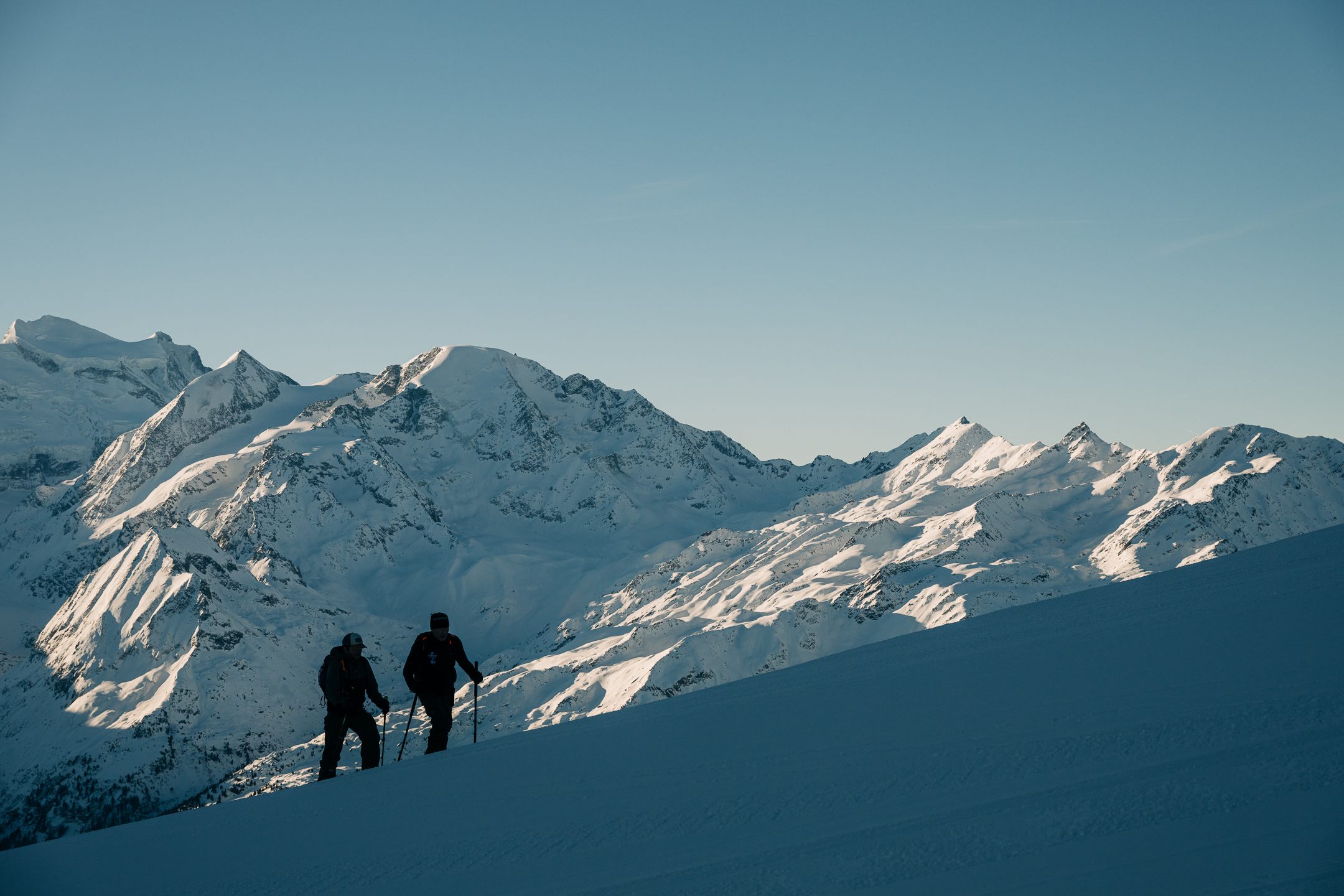
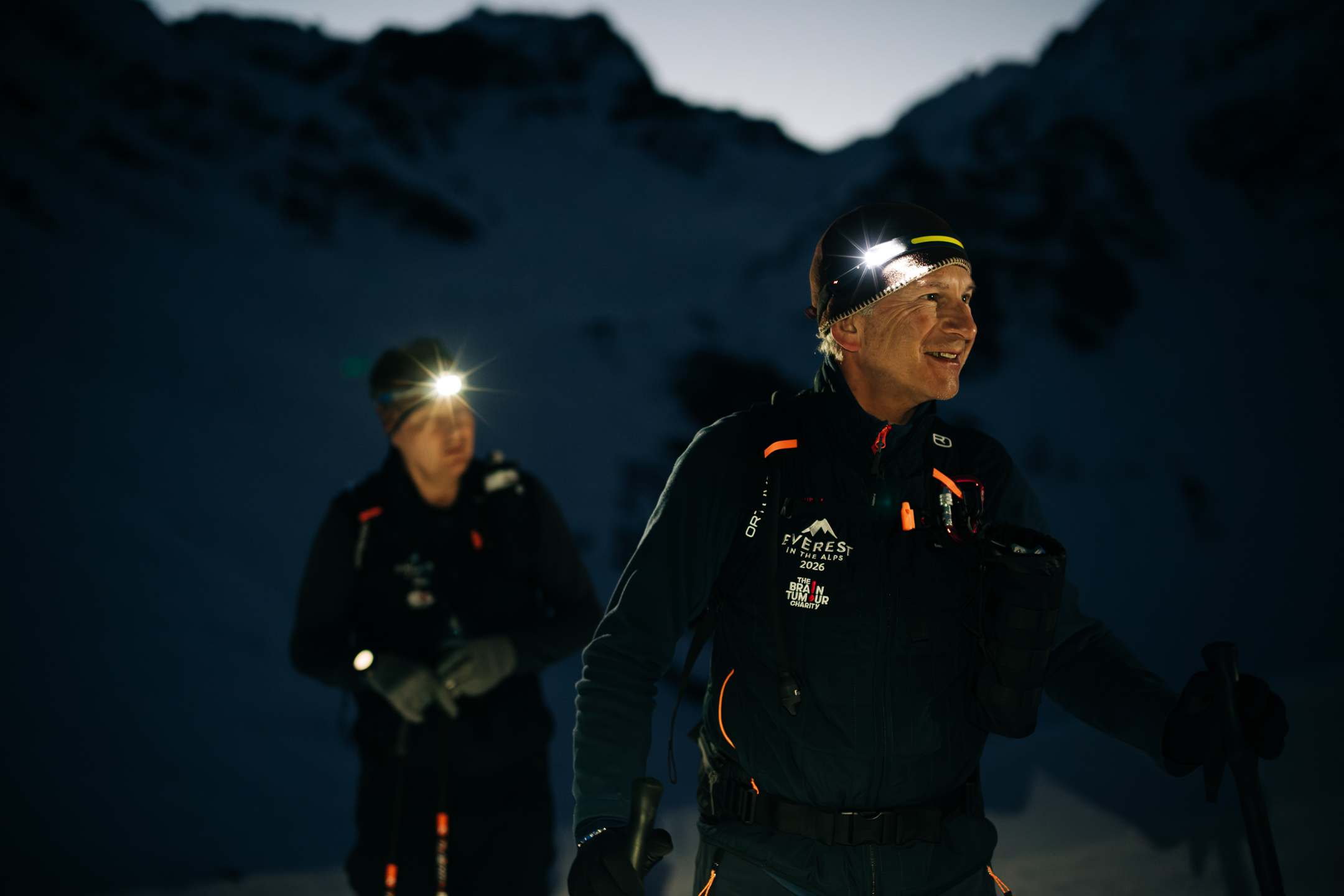
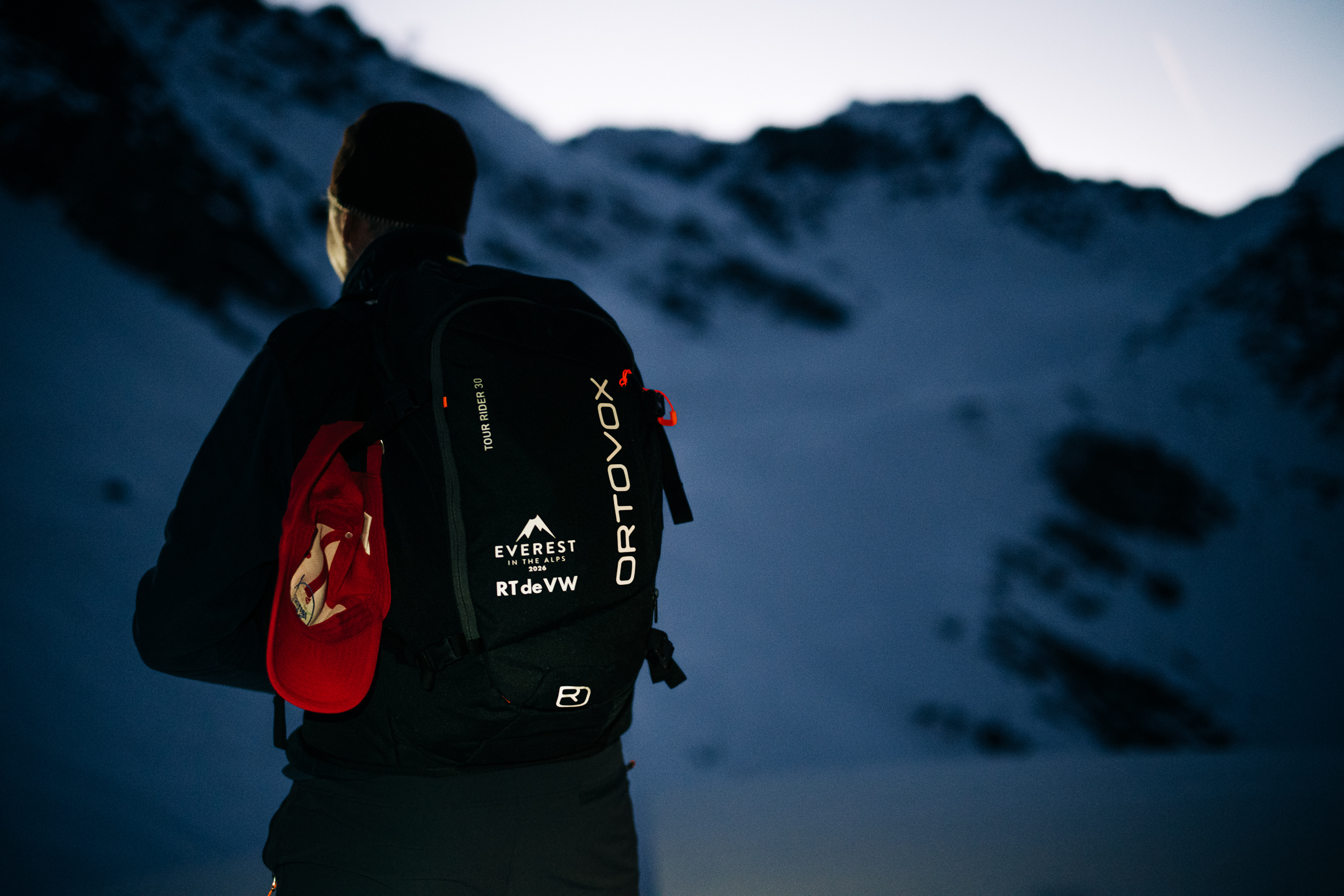
The start on Day 2 is special – it is the first day you get to experience dawn up at 2,500 metres. The Summit Saints were given the first departure gate at 6.30am which meant our dorm alarm went off at 5.15am – perhaps a bit early, but since we were all already awake it didn’t really matter.
I commented that the food at the Cabane was excellent but the real highlight is the breakfast. I was unexpectedly greeted by the smell of a patisserie in the dining room and the pain au chocolat was undeniably the most delicious I had ever tasted. There had been a complication overnight when a member of the Team Syren had fallen ill. The manner in which the EIA team dealt with a difficult situation was hugely professional. Their ultimate duty is to ensure that the maximum number of participants succeed in summitting, but this brings with it hard choices for those directly affected by sickness. The EIA team need to be free to use all the tools in the box including isolation, enforced rest and ultimately to advise a participant that he/she should retire if this is necessary. In EIA 2026, the ultimate sanction was not required, and we were thankful that everyone managed to stay the course.
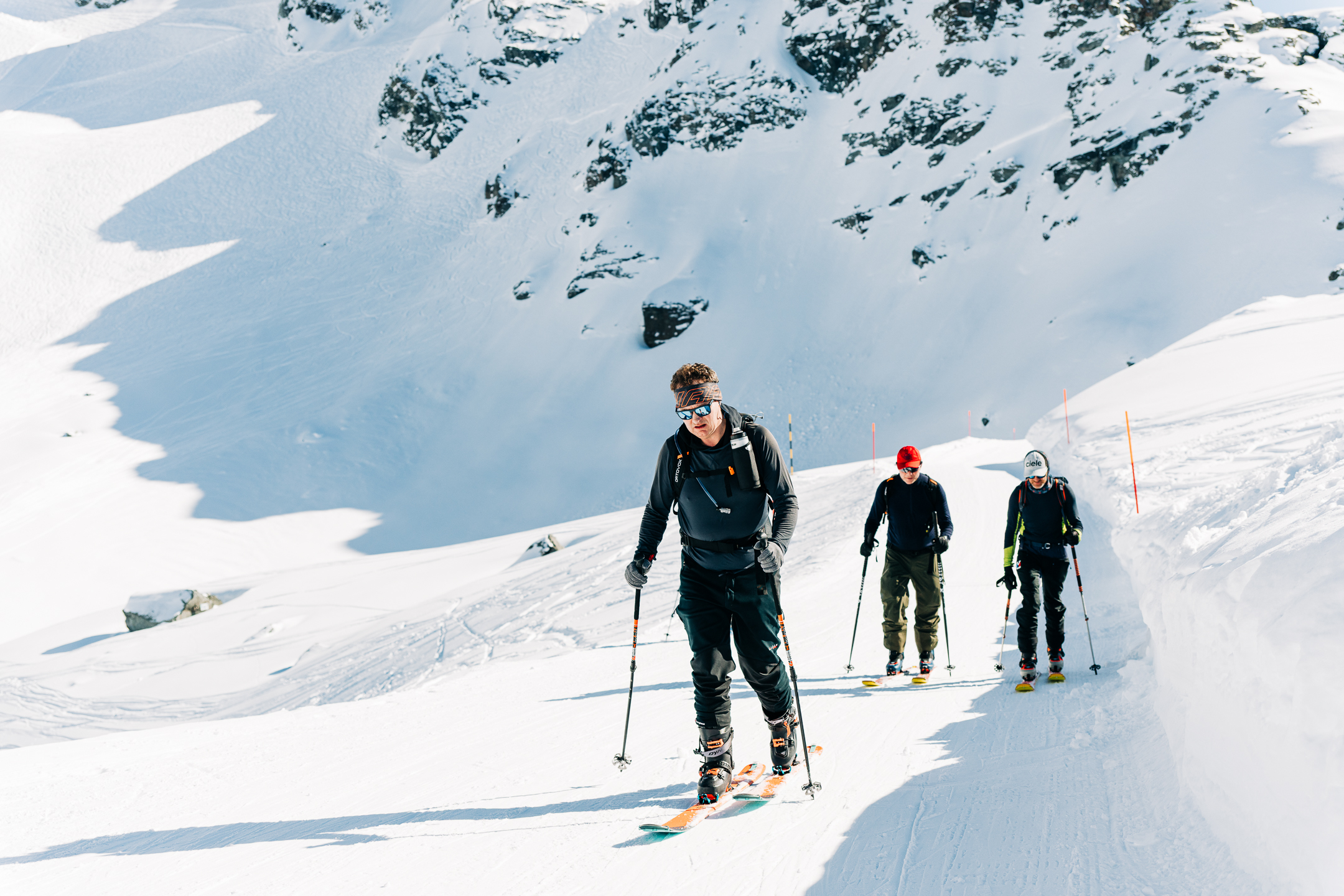
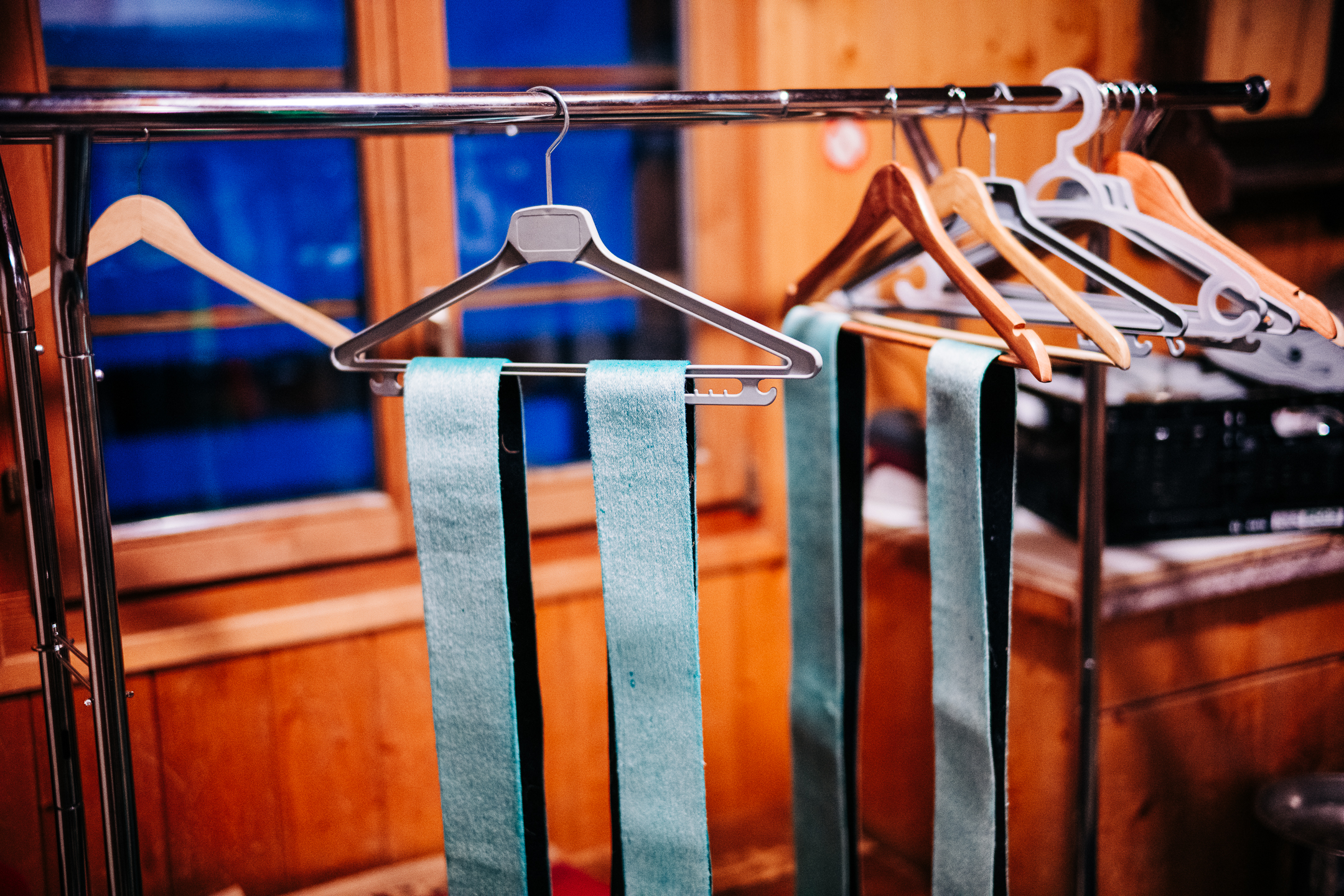
On Days 2 and 3 the guides chose routes that kept us up high initially to make use of the best snow and then we only ventured lower when the piste ice had softened. Day 2 also supplied our first real headache. Craig and I had left our skins drying on the bottom of our skis over lunch, however in the warm spring sun, the glue from the skins had transferred to the bottom of our skis. We both found we stuck to the snow and downhill skiing became impossible. Despite Rob’s best efforts and most colourful language, the glue could not be shifted off the ski bases. We were faced with a downlift and a return to Mountain Air to switch out our skis.
This proved to be a perfect illustration of EIA organisation – Rob radioed through to Paul and by the time that Craig and I walked into Mountain Air, Paul was already waiting there to help with a swift ski change and then accompany the two of us as we attempted to catch up the lost metres of the day. We ended up getting to know the track up to Col de Gentianes very well over Day 2 and 3. In return for our mishap, however, we were rewarded by the most spectacular sunset ski down to the Cabane, immortalised forever on Paul’s phone camera.
It was late by the time Craig and I managed to rejoin our team in the Cabane – but Charlie and Charlotte still made time for us, taping our sore feet and massaging our tired muscles.
Thursday 26th
Day 3 probably felt like the most gruelling of our EIA Challenge. The morning hikes through the woods from Medran, past Chez Danny and up to Les Ruinettes were definitely our favourite parts of the day – the pace seemed more relaxed, the terrain quite easy and the shade from the sun welcome.
Once the team got above Les Ruinettes the going was more challenging, requiring single file marching up the side of busy pistes towards Fontanet. Rob had one big surprise to share with us in the afternoon of Day 3. We had got our heads down and skinned our way back to the top of le Col de Gentianes – a mix of piste and cat track – a tough but enjoyable route in terms of duration. When we reached the peak at 2,894 metres, Rob shared his cunning plan to bank in the day’s metres; we would need to do the last 400 metres vertical, not once but twice more before the end of the day. In hindsight this experience felt like the defining moment of a challenge like Everest in the Alps – we were not out for a leisurely walk around the back country; we were primarily here to scale the height of the world’s highest mountain over four days to raise much-needed funds for Brain Tumour Research. The reward for all our efforts was the news in our final evening briefing at the Cabane that we had only 1,400 metres to climb on the last day.
Friday 27th
By Friday, the team is pretty much done with the early mornings and rumbling dormitories. You pack up your things which are a fair bit lighter without the kilos of nuts, fruit and energy bars that you have demolished over the previous days and you hand over your kit in the reverse process of Monday.
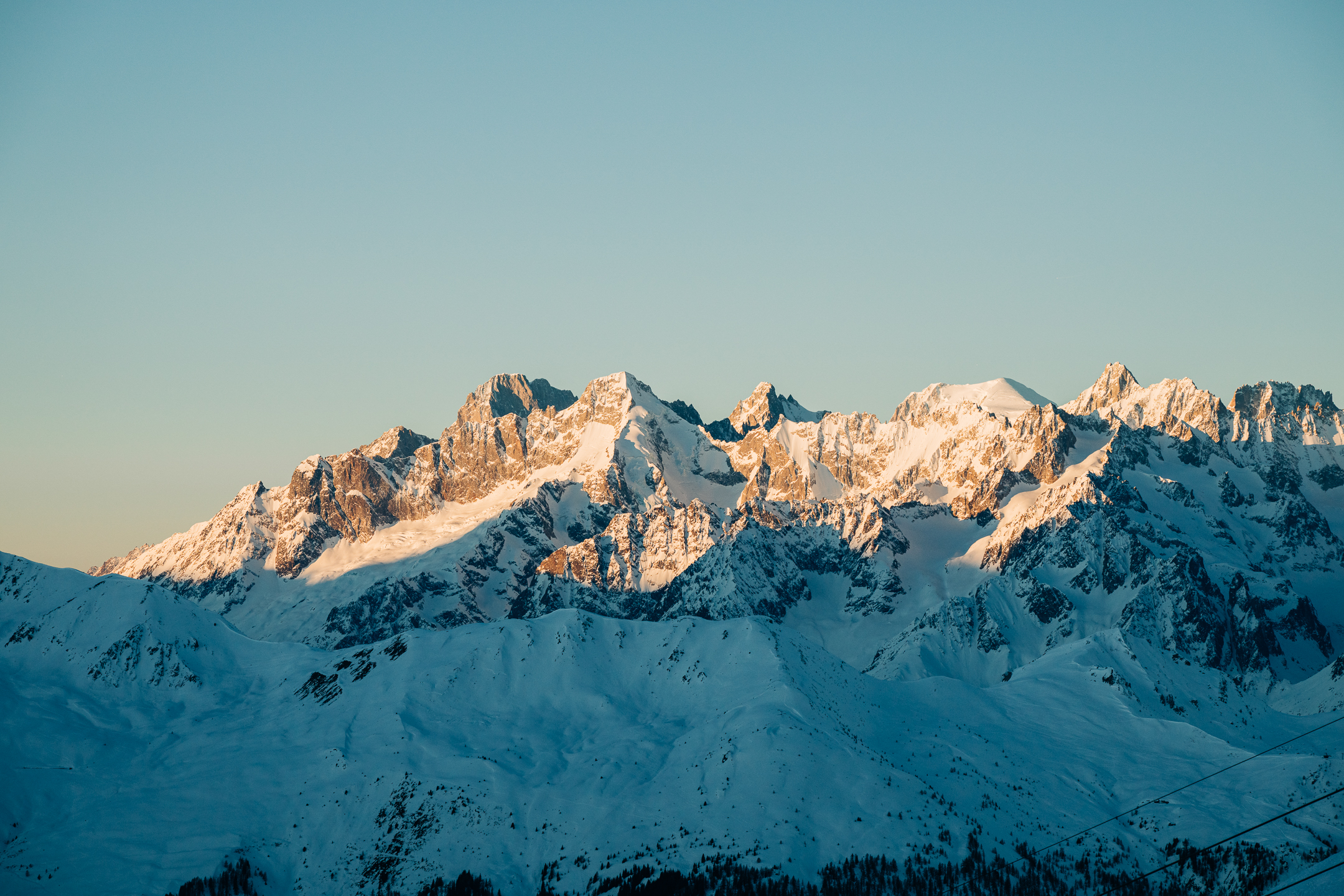
Summit Saints were the first out again on what was another incredible sunrise. The EIA challenge had one last surprise up its sleeve for our team. As we were skiing down, David repeatedly lost control of the edge of one of his skis; this was out of character as he had skied superbly all week. To our great surprise, the binding on his new skis had failed and was now only hanging on to the topsheet veneer of his ski. A less composed individual might have had a meltdown but David took it in his stride, jumped on the bus a short walk away and went and got a ski change. Again, this is genius of how Everest in the Alps is organised. If we had not been in resort, if we didn’t have a support team all connected with radios, a drama could easily turn into a crisis. As it is, these kinds of problems are resolved with the minimum of fuss.
The team had a wonderful moment waiting for us at our pitstop at Les Ruinettes. Flo with her daughter and future EIA challenger, Elsie and Rob with his wife and co-founder of EIA, Tanya, were there to greet us. With the end in sight, this was a very happy reunion and some of the enormity of what we were close to achieving started to dawn on the team.
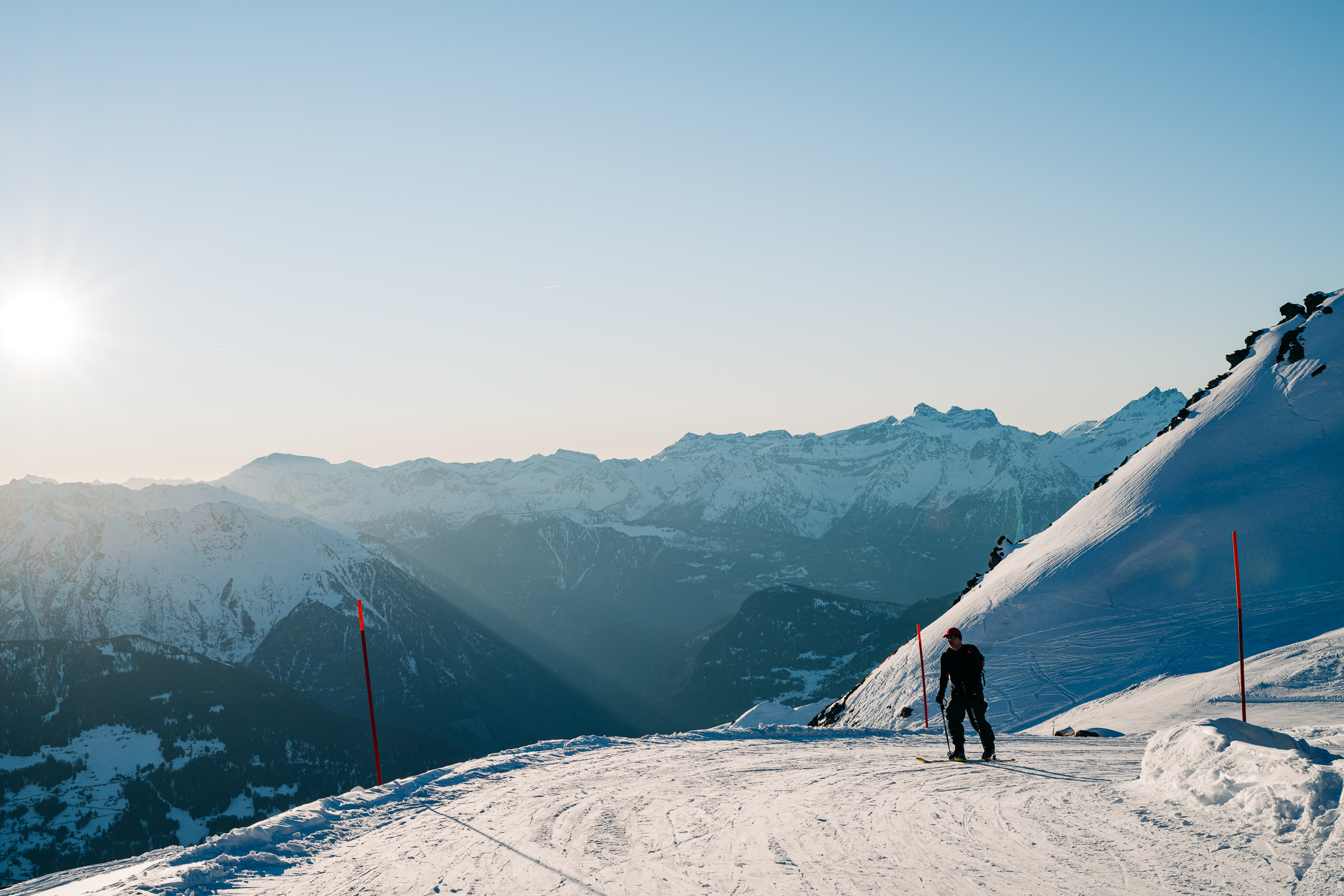
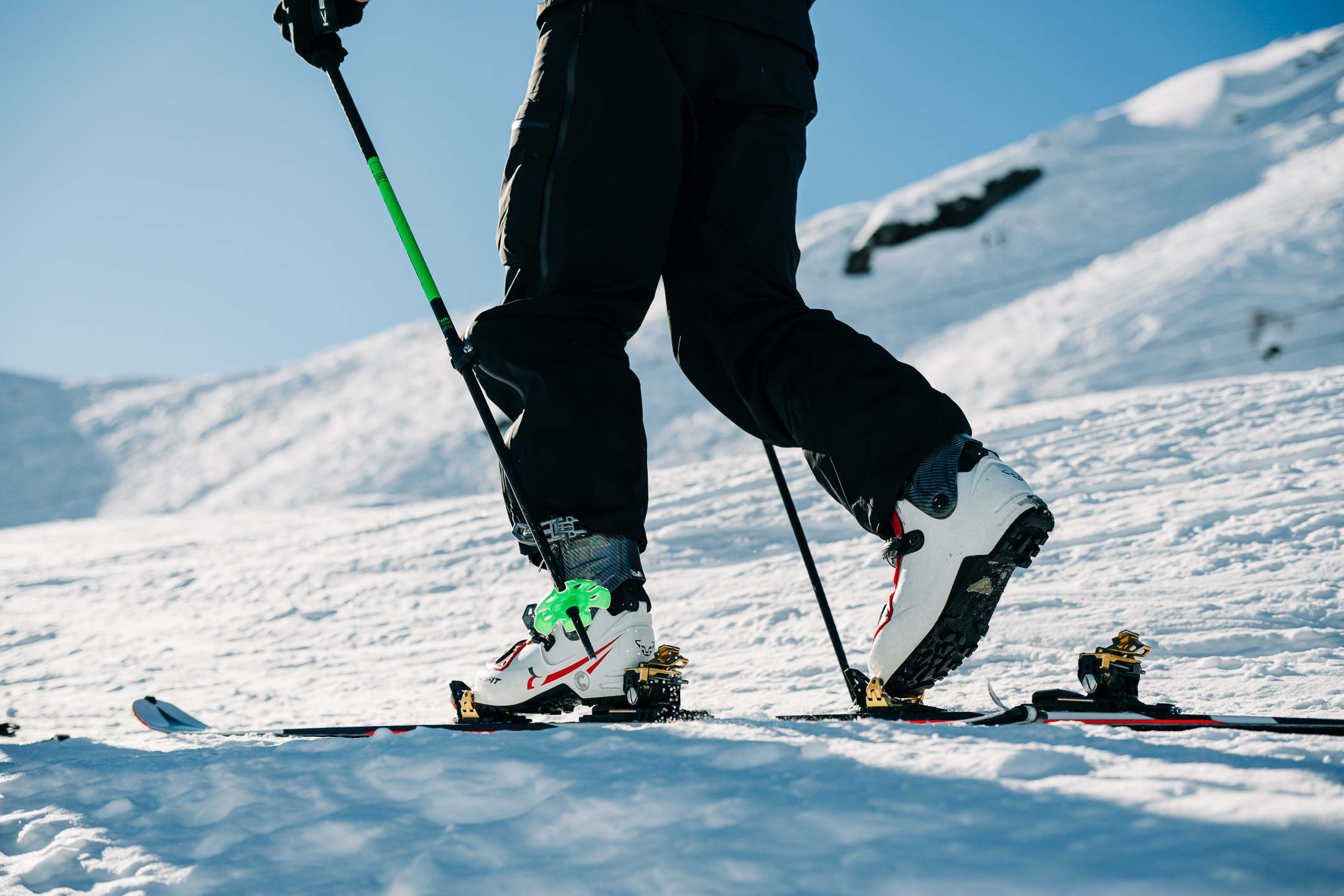
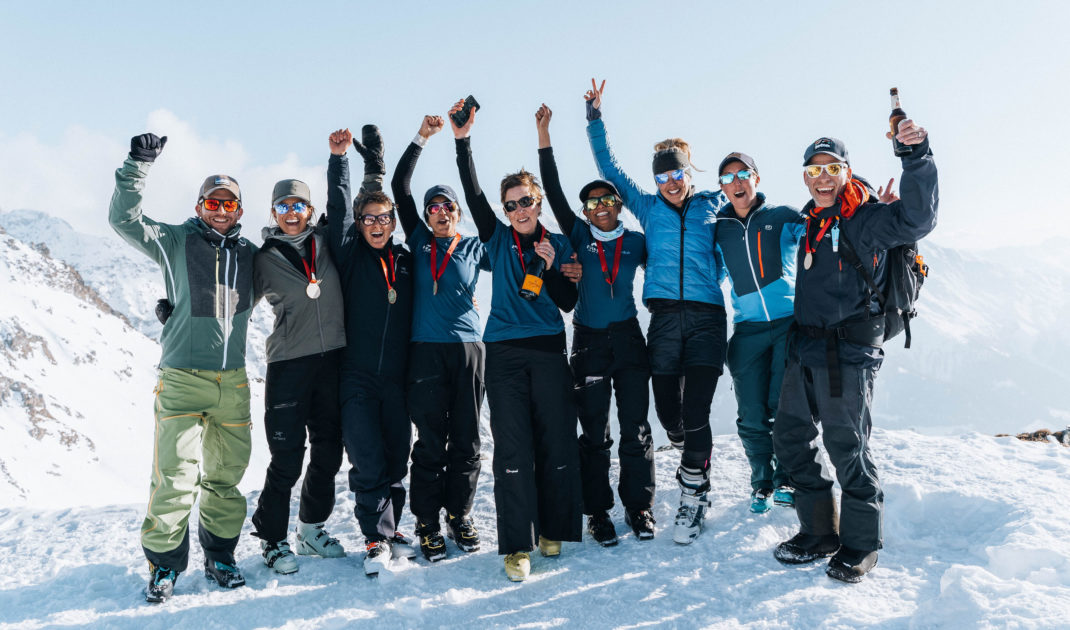
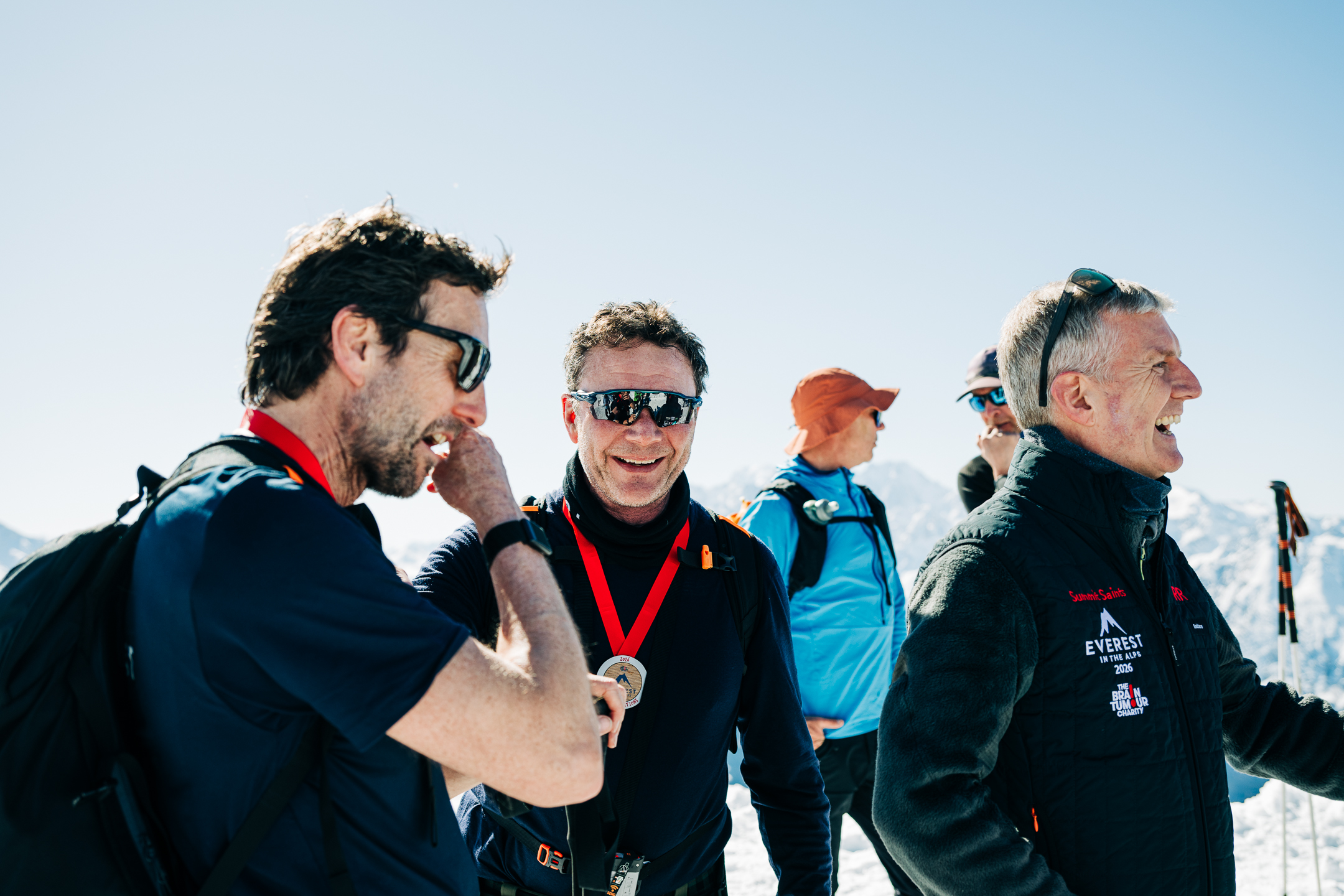
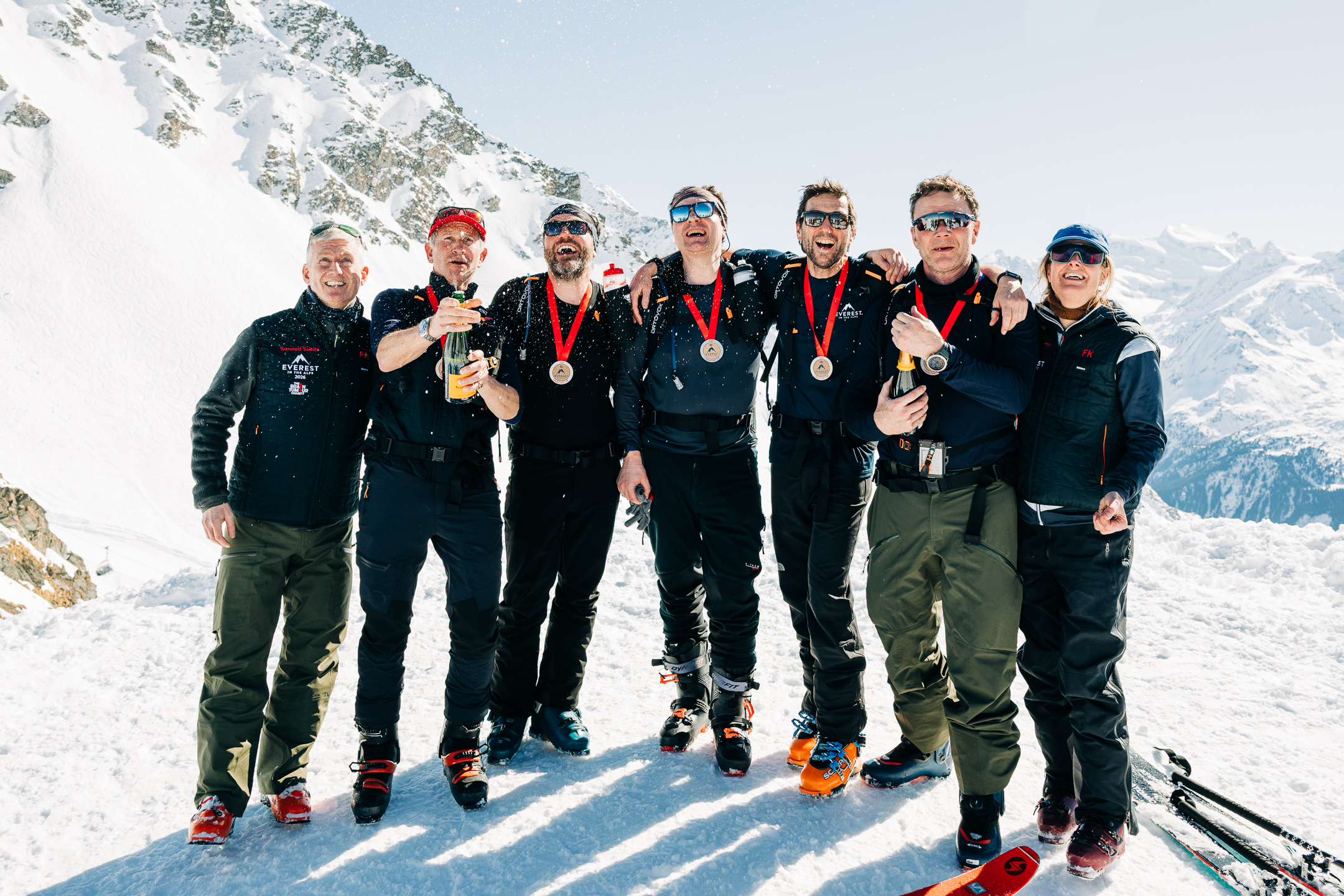
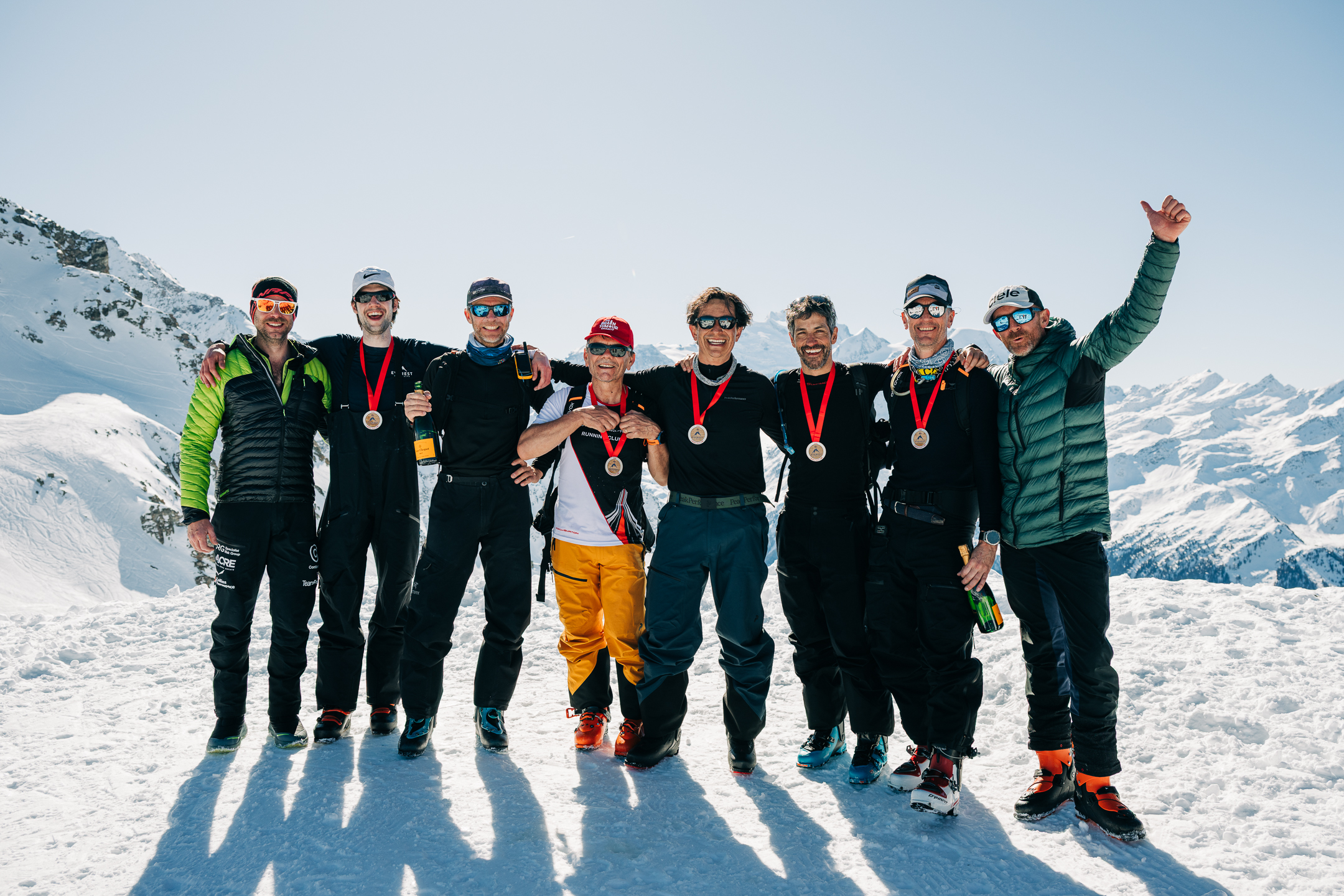
It seemed like our last 600 metres would be like a victory lap to the finish line; however, this was not exactly the case! There is a tricky section as you approach the Attelas peak, where the guides need to choose between a busy and fairly steep red or black, or venture off into the adjacent mogul fields and follow a faint track on a traverse. As if to reinforce the point that this was no Sunday afternoon walk, we all struggled through the mogul field, inching our way forwards, looking like beginners. Our strong showing as model students slightly abandoned us, and we probably made a bit of a hash of it, but Rob remained patient as ever and finally around 2.30 in the afternoon, the team crossed the line together to whoops and claps from our group of supporters and helpers. It was a great feeling.
With the reduced metres required on Day 4, the team was free to enjoy a relaxed lunch reviewing our experiences together. At some point in the afternoon, we gingerly made our descent on skis, handed back our kit at Mountain Air and went off to get cleaned up for a terrific final dinner with the EIA and Syren teams. By 8am the following morning three of our team had already departed for the UK and life started the long process back to normalisation.
I don’t think the Summit Saints would change a thing about this experience. Above all, EIA is exceptionally well organised and as a participant, you never feel abandoned or that anything has been left to chance. Here’s to a profound hope, that the magic of EIA can persist and be experienced by many more teams in the years ahead.
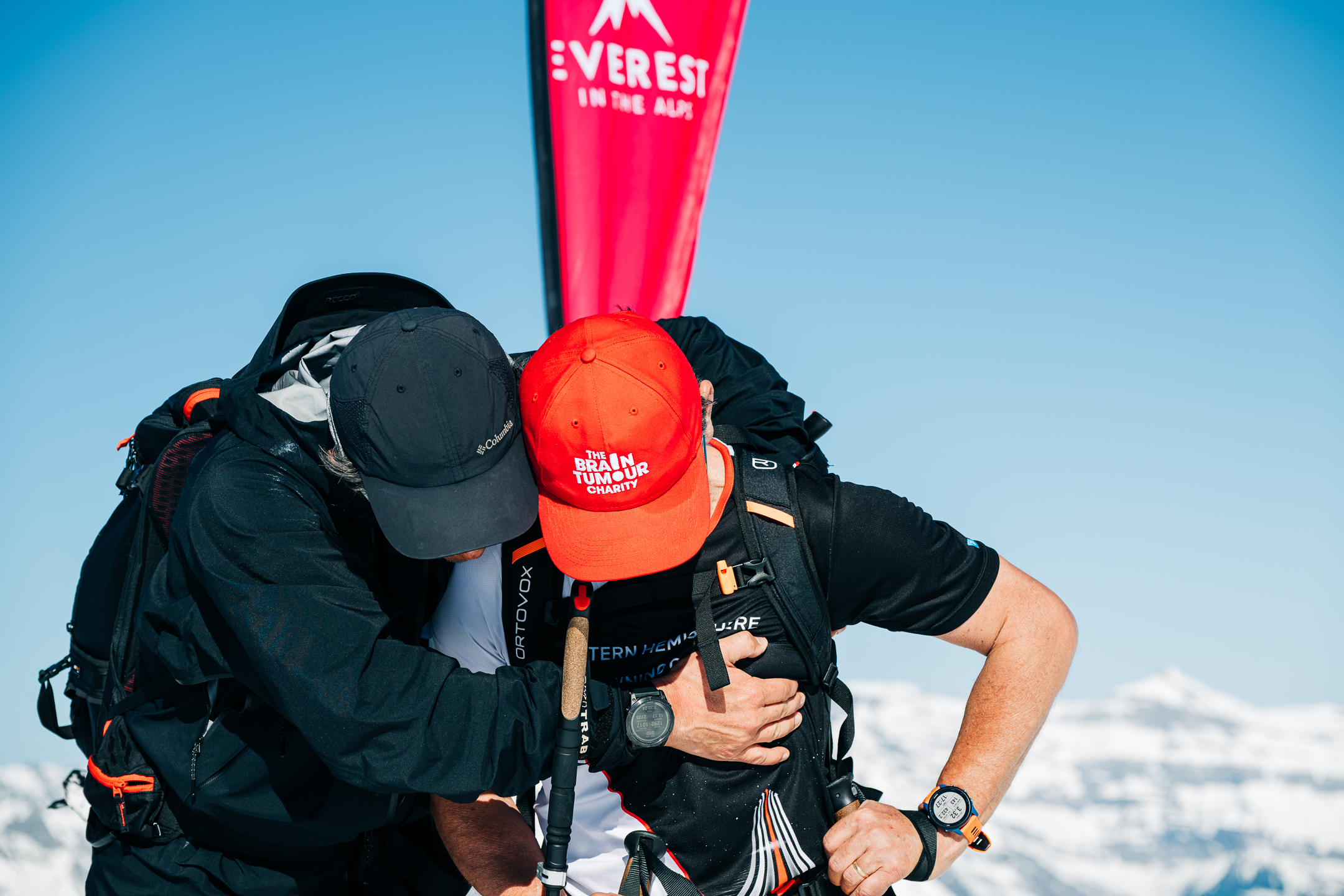
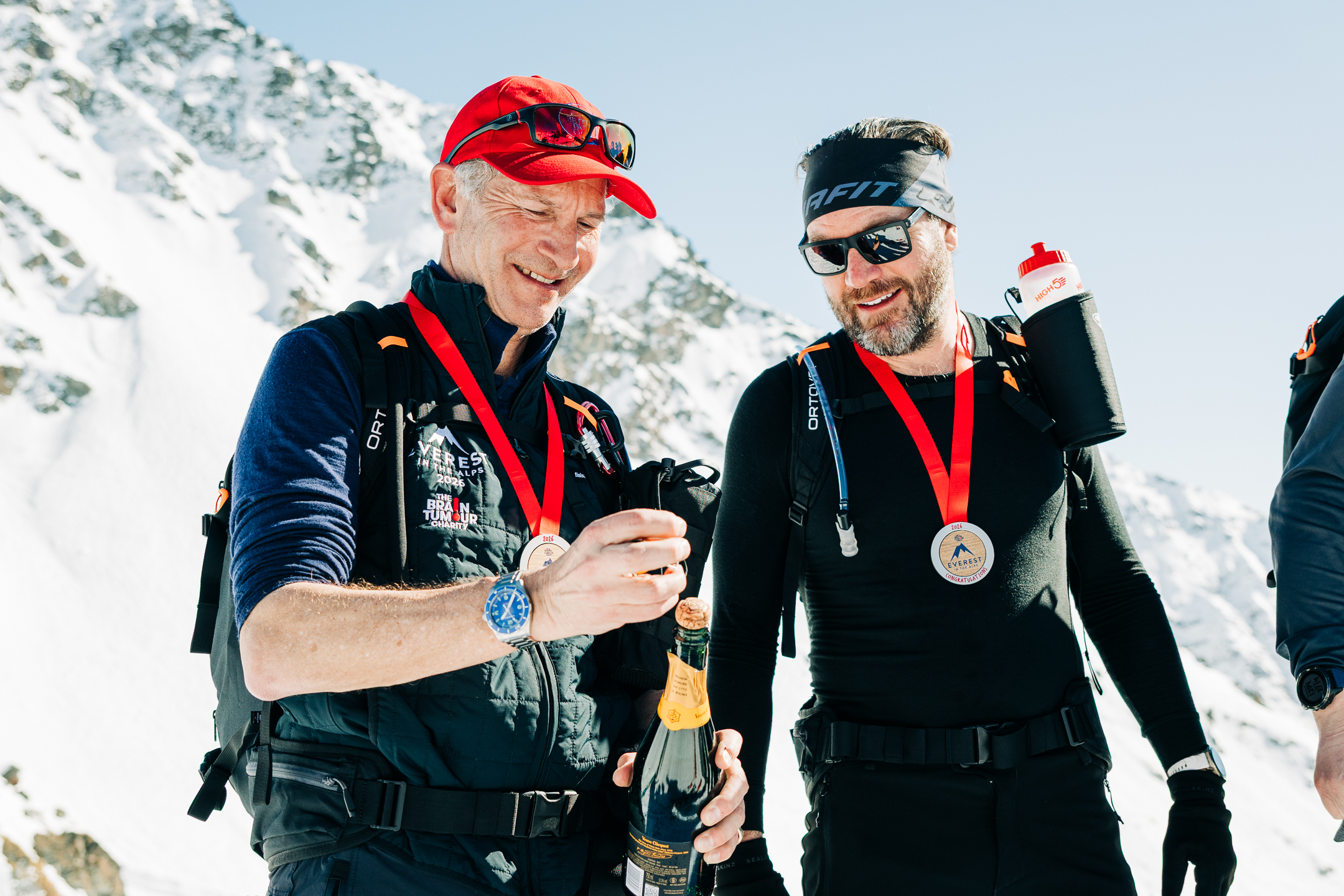
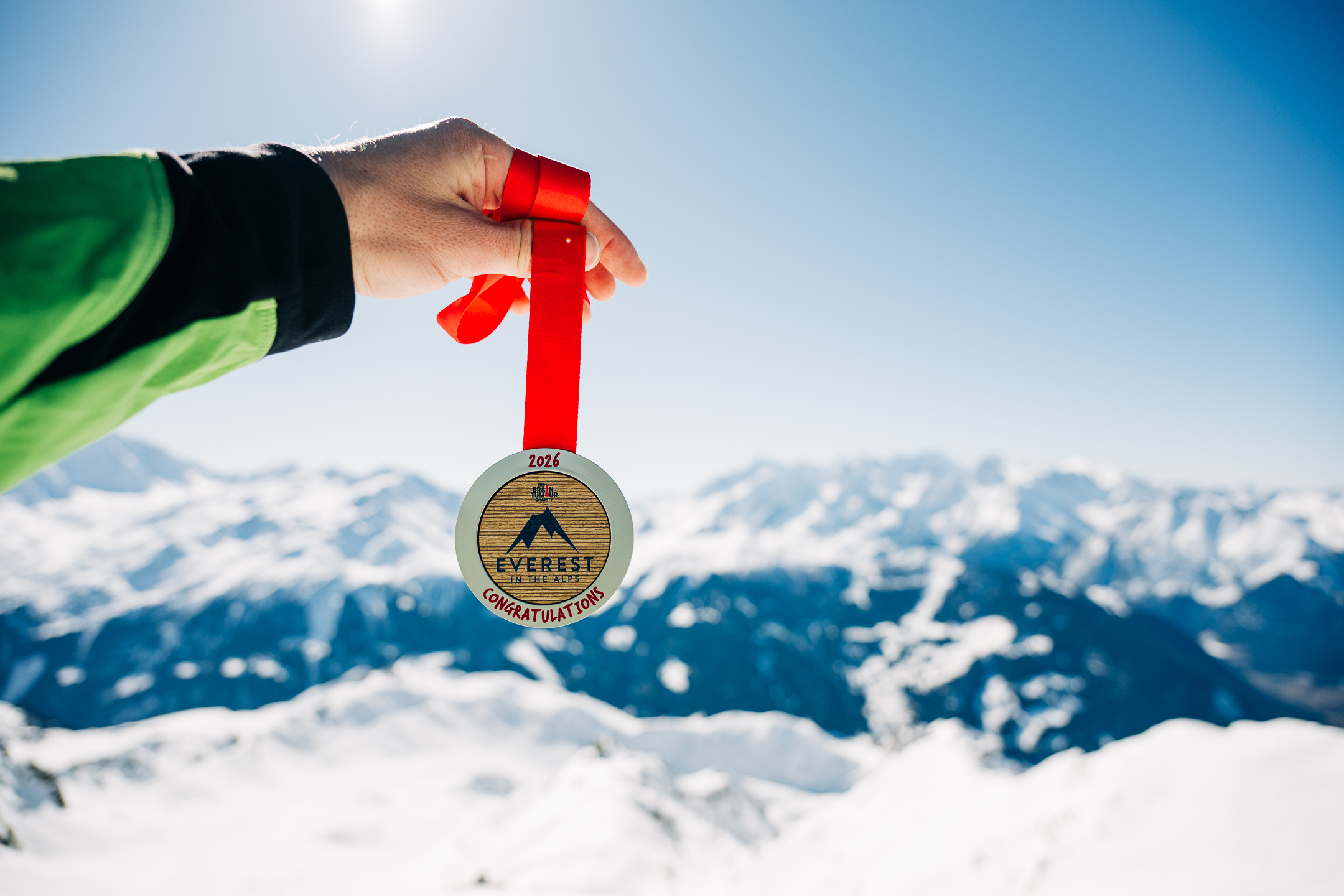
If our adventure has moved you even a fraction as much as it moved us, please consider making a final donation to Brain Tumour Research — every pound goes directly to research at the Everest Centre for the Brain Tumour Charity, and with the EIA 2026 community closing in on £200,000 raised, you’d be helping push something truly special over the line: Donate Here.